Alain Biltereyst
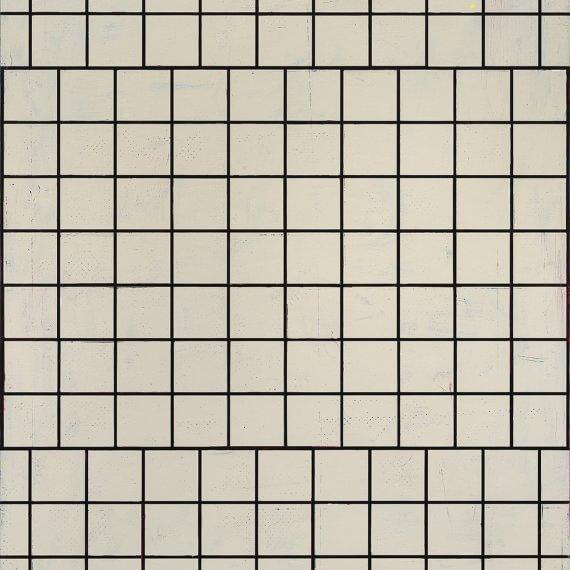
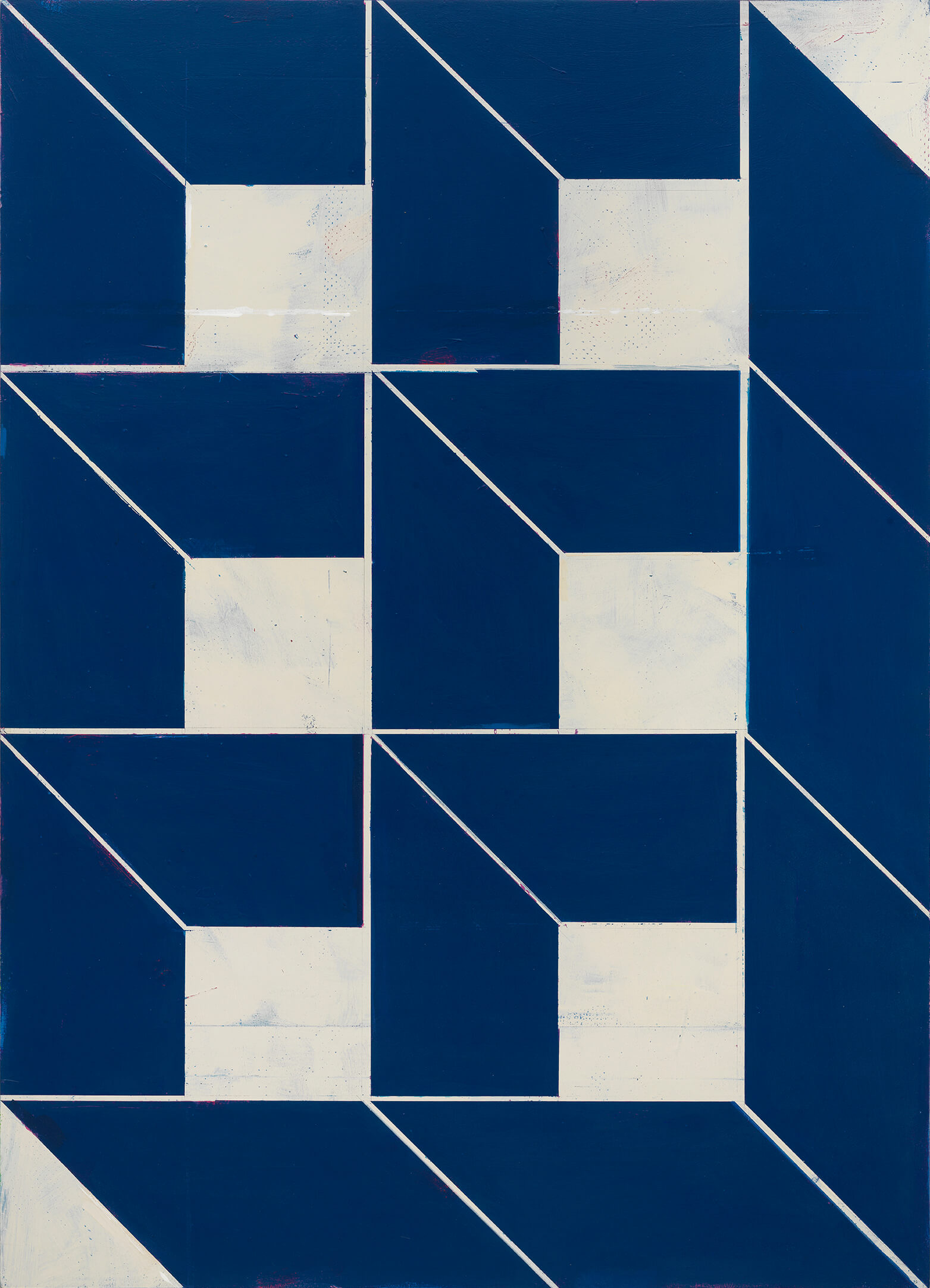
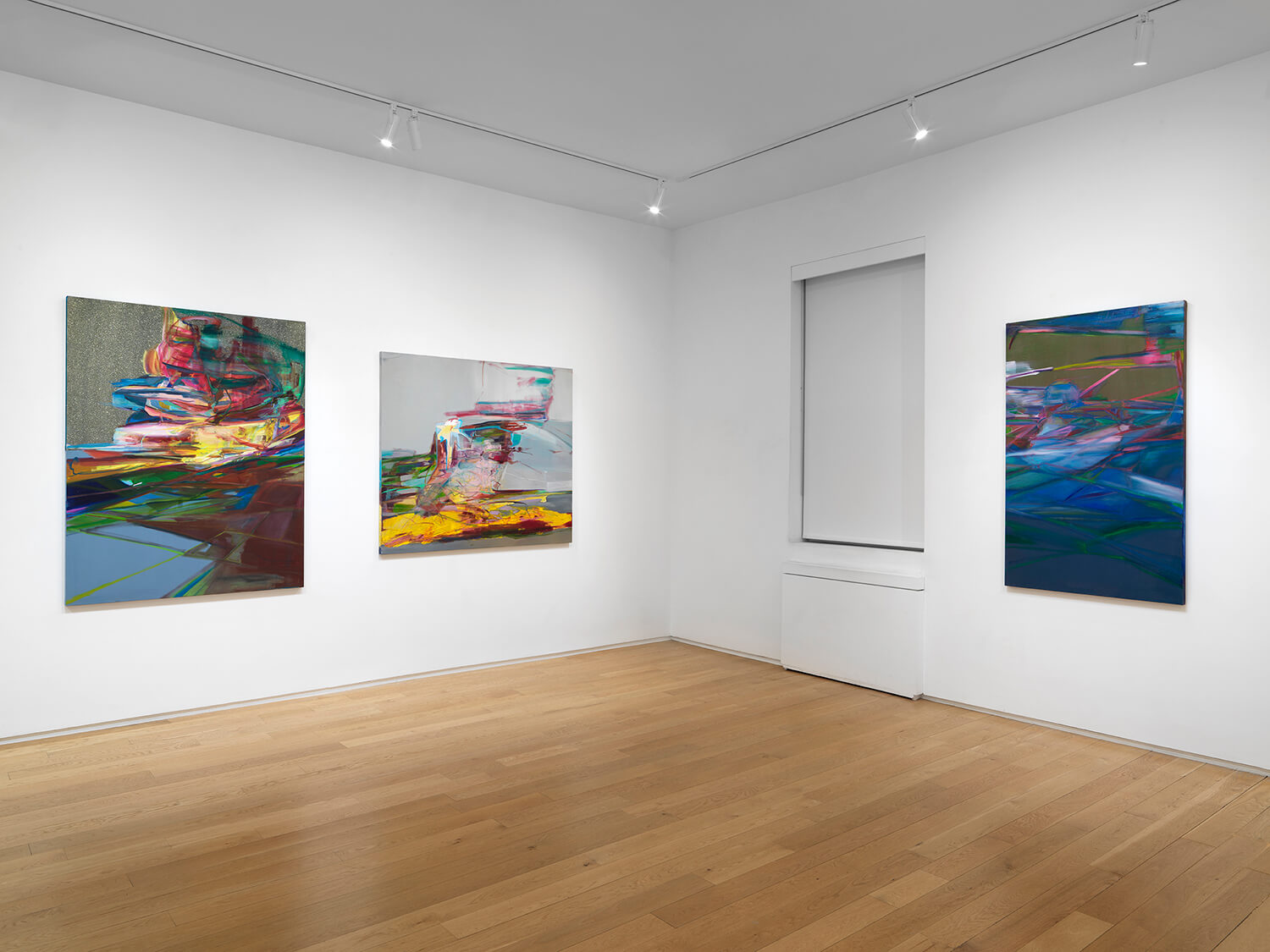
Untitled, 2017
acrylic on panel
61 x 44 in (154.9 x 111.8 cm.)
Photo: Dario Lasagni
December 10, 2025-January 14, 2026
Alexander Berggruen is pleased to present After Image. This exhibition will open Wednesday, December 10 with a 5-7 pm opening reception at the gallery (1018 Madison Ave., Fl. 3), open to the public.
Included in After Image are works by:
Alain Biltereyst
Azadeh Elmizadeh
Evan Holloway
Paul Kremer
Anna Kunz
Vicente Matte
H.E. Morris

After Image brings together artists of varied geographies and approaches, each working in distinct modes of abstraction—some from reality, some from intuition, and others through a synthesis of the two. For several artists, abstraction begins with observation. Reality is distilled and transformed onto the flat surface or into sculptural form, revealing how representation can drift from the realities it once described. This recalls Jean Baudrillard’s notion of the image’s separation from its referent, a condition increasingly evident in our image-saturated world. Conversely, other artists begin from intuition rather than observation. Artists working in this way often emphasize physicality and the sensory familiarity of form. After Image evokes visual residue and artistic legacy, each contributing to an image’s enduring power.
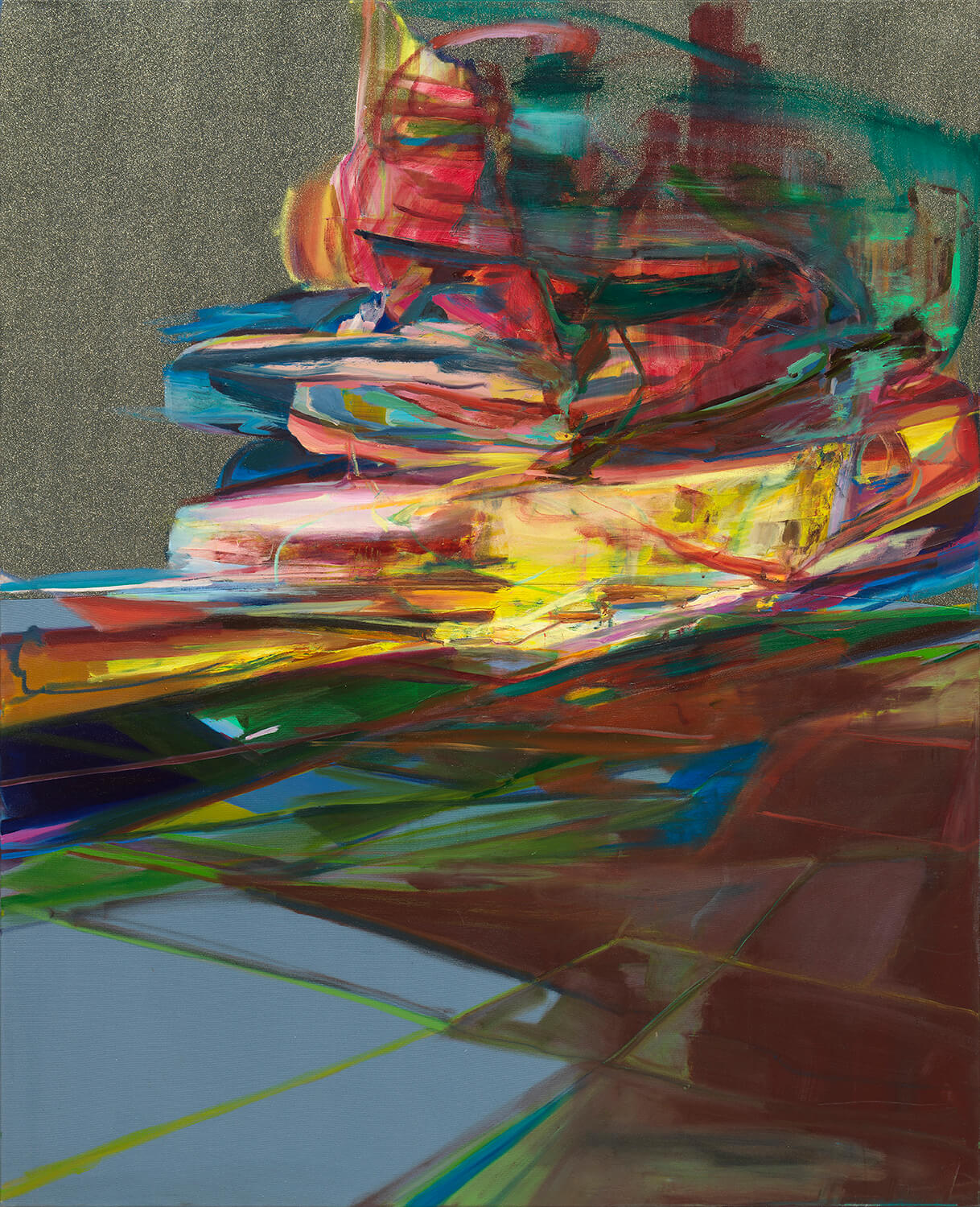
Alain Biltereyst’s paintings draw on the visual codes of public space, such as city truck designs, packaging, and architectural motifs. His work translates this utilitarian visual language into subtle abstractions where stripes, lines, shapes, and colors are arranged with rhythm and compositional balance. Exploring how the ideals of Modernism have penetrated everyday life through design and mass production, Biltereyst juxtaposes clean, precise forms with a painterly approach. Traces of earlier brushstrokes appear throughout. Here, Modernist formalism meets the messy vitality of popular culture. In Emily Hall’s words for Artforum, “as signs that don’t seem to want anything from us, these paintings offer small, fierce, cheerful—and poetic and simple—moments of resistance” (1).

Azadeh Elmizadeh draws inspiration from the natural world, compounding her paintings with references to history, myths, and fables. Geometric forms seep into one another and gesture towards a glimpse of a birdlike figure, evoking transcendent flight. The colors in her work recall those found in nature, color field painting, and vibrant Persian miniature paintings. Working on the canvas at various times and locations, she presents multiple temporalities and references at once, connecting ancient storytelling with the present natural world.
Evan Holloway’s work points to the complex natural structures that underpin reality, translated in many forms of media, primarily sculpture. The knobby rods that make up his sculpture One and Two recall the shape of twigs, while their composition gestures toward a cube. His works on paper are made by marking paper with ink while it is rotated on a turntable. The freedom this automatic procedure introduces recalls the patterns—and patterned chaos—that exist at every level of nature. Rendered in exuberant color, his work insists on the physical object as the site of an artwork’s meaning.

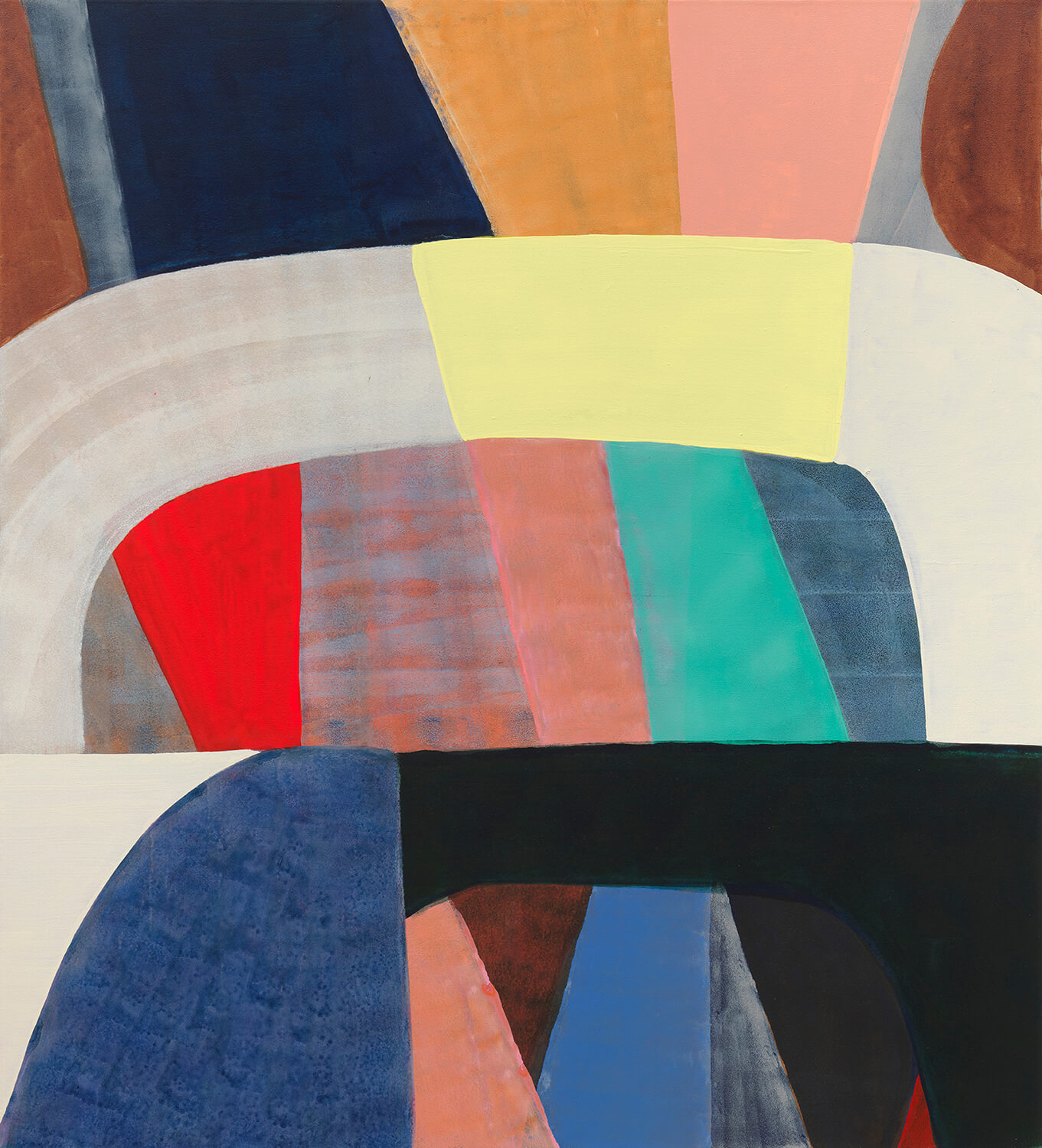
Paul Kremer’s paintings feature shapes that he generates from his spontaneous sketches and his archive of past works. The artist adapts these intuitive shapes to new contexts, engendering novel interpretations. Kremer’s visual logic is rooted in, in his words, “a unified but endlessly variable set of possibilities for new works, based on a process that allows for both creation and re-use, as well as generation and derivation.” Kremer achieves his hard-edged, flat, modernist style with a blend of wet, yet opaque acrylic paint that drips down the edges of his canvases, striking a balance between controlled mark-making and seemingly-spontaneous motion on all four edges. Looking at the negative space, the figure-ground relationship can fall apart as a viewer finds the imagery transformed into something else.
Anna Kunz makes luminous, vibrant paintings with an emphasis on color, material, and process. Her practice thoughtfully considers a viewer’s experience, taking into account—with deep awareness and intentionality—how each work, each gesture, affects the exhibition space and, by extension, a viewer. Charged optical relationships emerge. Color intervenes and signals alarm, but ultimately Kunz’s embrace of vibrant color offers positivity. Her paintings leave an optical imprint with a viewer, whereby in the artist’s words, “The immediate, visceral experience of color can leave a lasting impression, bringing one’s sense of perception into awareness. It reveals as much about absence as it does about presence.” The artist uses painting to suggest a way of looking (and being in the world) that privileges sensation over interpretation, grounding a viewer in the present moment while also offering multiple perspectives.
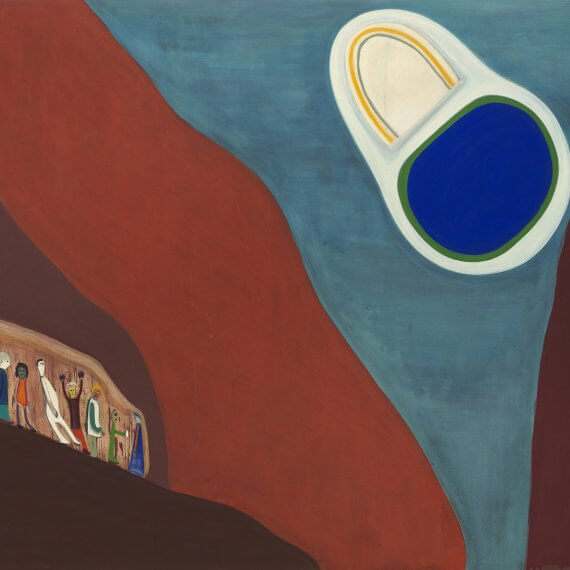
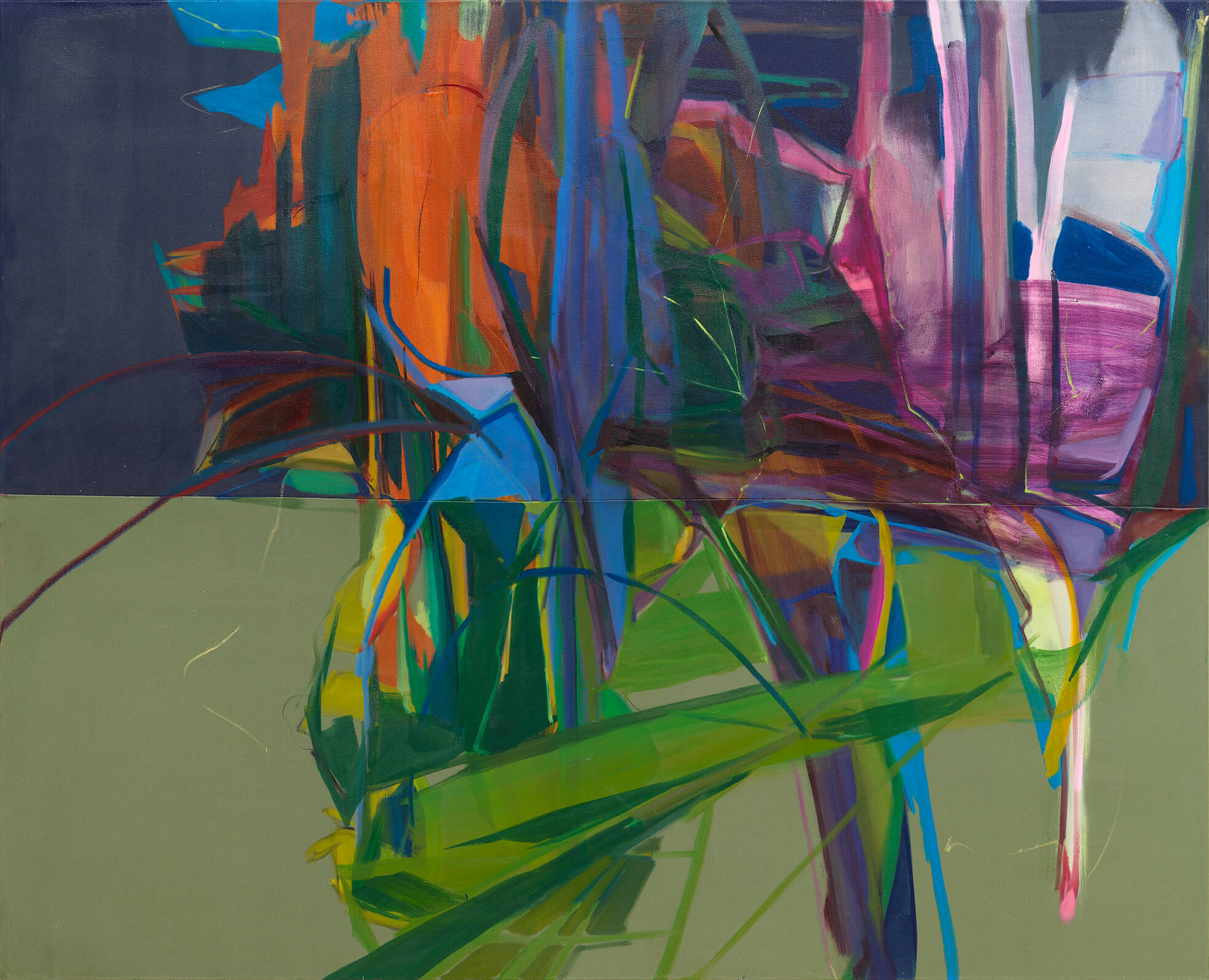
Vicente Matte
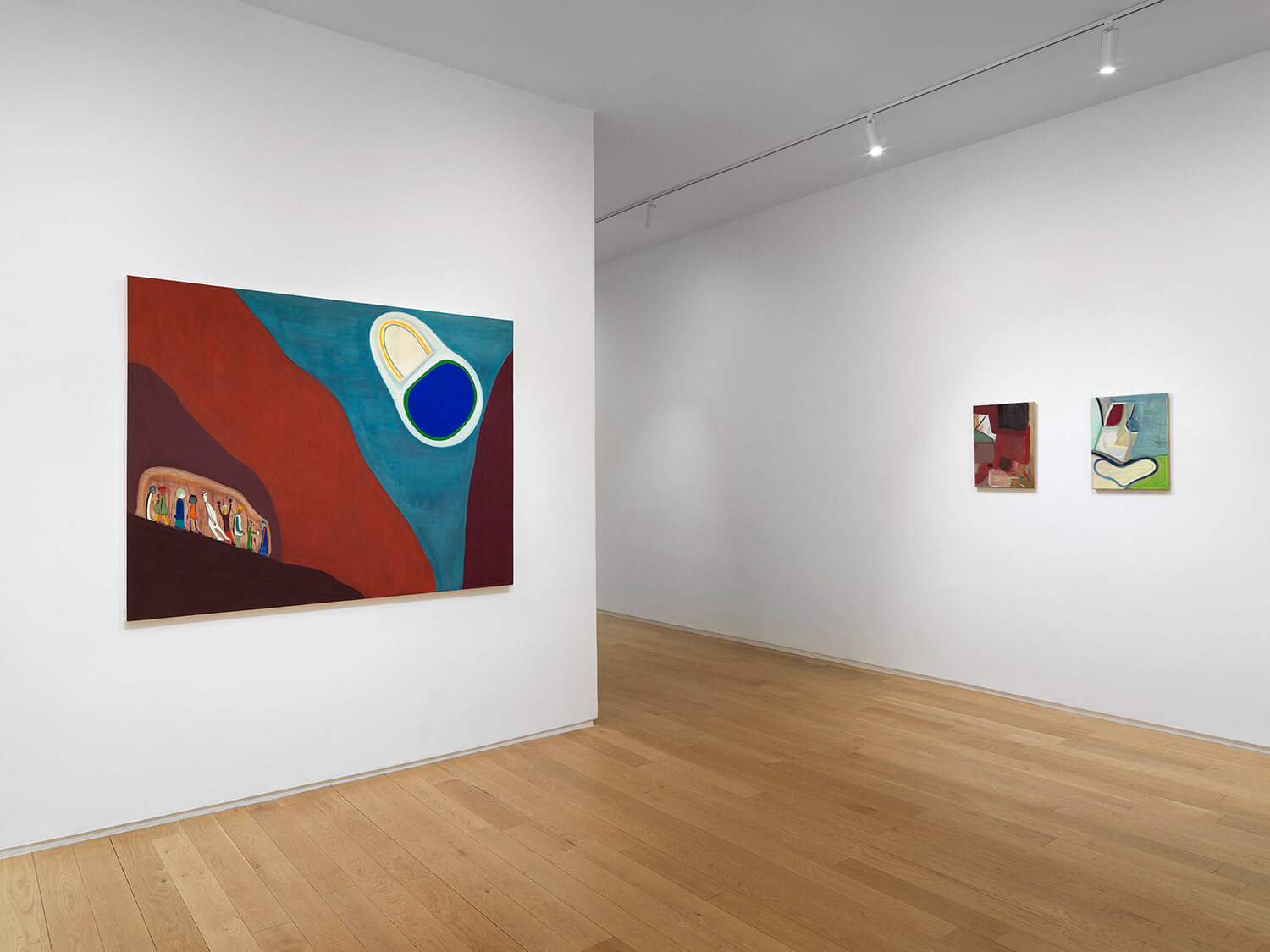
Great Conjunction, 2023
distemper on canvas
53 1/8 x 66 7/8 in. (134.9 x 169.9 cm.)
Vicente Matte’s paintings maintain their references while concentrating on their formal and psychological properties. The figure is preserved even as, in the artist’s words, he “allows the forms to go as far as possible in the search of an inexplicable adaptation.” His painting Great Conjunction depicts an astronomical event of the same name between Jupiter and Saturn that he witnessed from his home in Santiago, Chile. This abstract landscape collapses vast distances and scales into distinct geometric shapes and cross layers as a group of figures huddles in the lower left register. Pushing the forms even further, his two Untitled paintings in this exhibition retain traces of the human face despite being refined into geometry. Matte’s search for meaning exposes a precarious balance between shape and context.
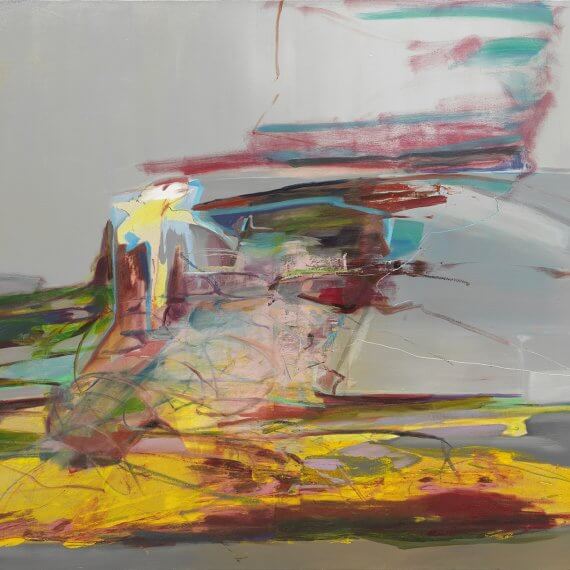
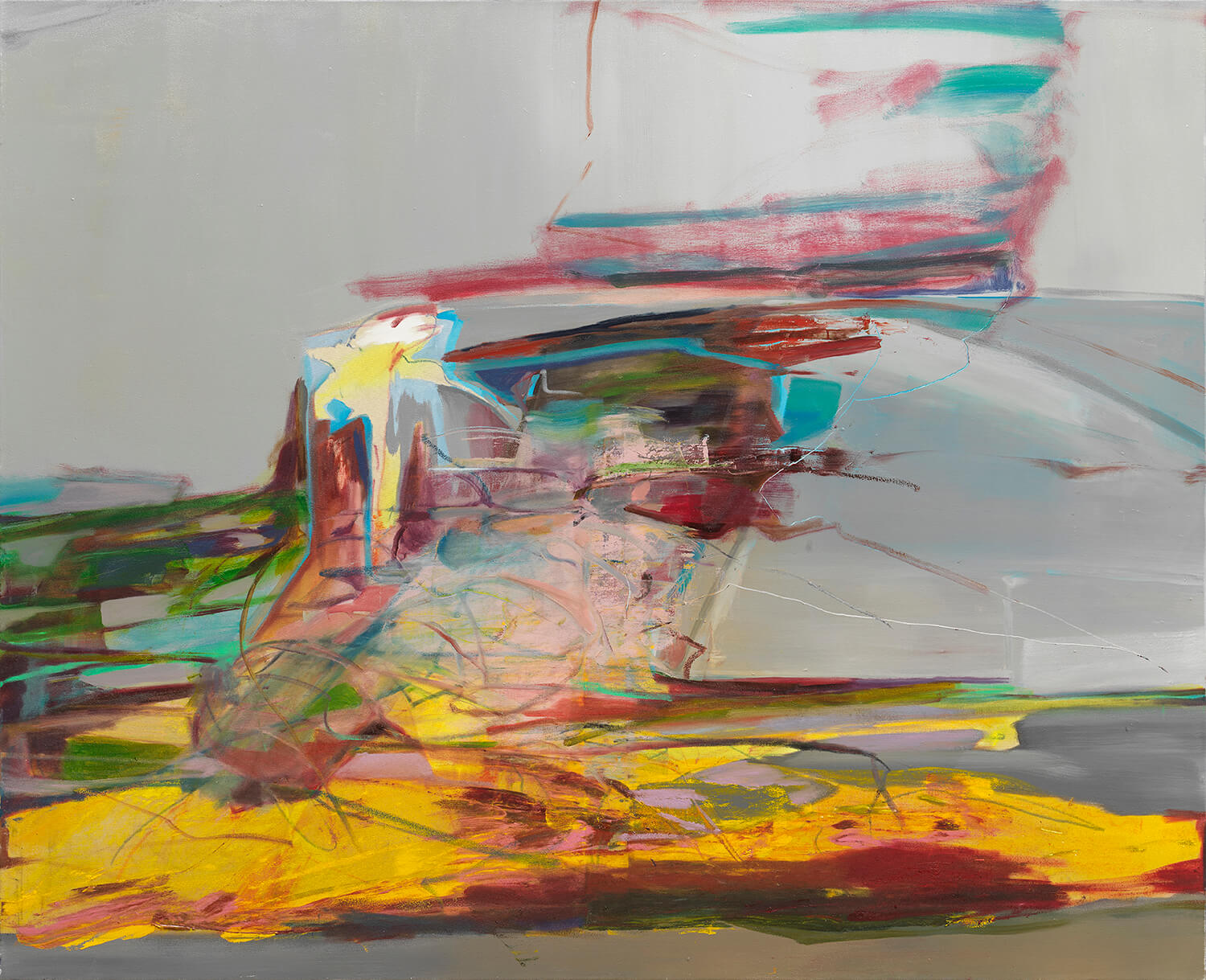
H. E. Morris paints forms and lines that at times appear to follow a structure, and at other times appear to collapse into gestural, blended veils and swarms. The artist considers her work to be a site of conflict navigation, which she thinks of in two different ways. First, she cites Cézanne’s method of working: an artist must search for “catastrophe” to start anew after the collapse of reality’s framework. Second, she encounters conflict when approaching a painting by taking on, in her words, “the role of the witness to the world,” following her own subjective interpretation. In Eclipse, for instance, painted, overlapping fabrics create a shifting surface that induces areas of blur and dynamic perceptual movement. As a viewer moves around the work, color and mark shift with the light. She explains, “The mark making provides evidence of both working with and against the color palette, suggesting where and when a conflict is arising.”
Employing abstraction to engage vision and thought, these artists signal how images persist and transform.
(1) Emily Hall, “Alain Biltereyst,” Artforum, Vol. 53, No. 2, October 2014.
Press release by Kirsten Cave, adapted from the artists’ statements.
After Image will run at Alexander Berggruen (1018 Madison Avenue, Floor 3) from December 10, 2025-January 14, 2026. The exhibition’s preview is available upon request. For all inquiries, please contact the gallery at info@alexanderberggruen.com.
Alain Biltereyst (b. 1965, Brussels) has exhibited internationally. Recent solo shows have been held at QG- Gallery, Brussels; PS projectspace, Amsterdam; dr.julius art projects, Berlin; Xippas, Genève; Adhoc, Bochum, Germany; Xippas, Paris; and Jack Hanley Gallery, New York, NY. His work has been exhibited at institutions such as Bonisson Art Center, Rognes, France; Fondation CAB, Brussels; Museum Voorlinden, Wassenaar, Netherlands; Tremenheere Sculpture Garden, Penzance, UK; and Museum De Lakenhal, Leiden, NL. The artist lives and works in Brussels.
Azadeh Elmizadeh (b. 1987 Tehran, IR) received an MFA from the University of Guelph, a BFA in Drawing and Painting from OCAD, and a BFA in Visual Communication and Graphic Design at Tehran University. Elmizadeh has presented solo and two-person exhibitions at Tara Downs, New York; Frieze London, UK; Sea View, Los Angeles; Tube Culture Hall, Milan, IT, curated by Domenico de Chirico; the Southern Alberta Art Gallery, Lethbridge, AB; and Franz Kaka, Toronto, CA. Her work has been exhibited internationally at Make Room, Los Angeles; Harkawik, New York; Anat Ebgi, Los Angeles; Public Gallery, London, UK; Nanaimo Art Gallery, CA; Winnipeg Art Gallery, CA; Kamloops Art Gallery, CA; and The Blackwood, Mississauga, CA; among others. Elmizadeh’s work has been written about in Hyperallergic, Frieze, Blackflash Magazine, Canadian Art, Border Crossings, The Editorial Magazine, and Elle Canada. She was the 2020 recipient of the Joseph Plaskett Award in painting. Elmizadeh lives and works in Toronto, CA.
Evan Holloway (b. 1967, Whittier, California) has been featured in numerous institutional group exhibitions, including 40 for LA, Museum of Contemporary Art, Los Angeles, CA (2019); The Sculpture Park, Madhavendra Palace, Nahargarh Fort, Jaipur, India (2017); Los Angeles – a fiction, Musée d’art contemporain de Lyon, France (2017) and Astrup Fearnley Museet, Oslo, Norway (2016); Don’t Look Back: The 1990s at MOCA, Museum of Contemporary Art, Los Angeles, CA (2016); Lightness of Being, Public Art Fund, City Hall Park, New York, NY (2013); All of this and nothing, Hammer Museum, Los Angeles, CA (2011); 2008 California Biennial, Orange County Museum of Art, Newport Beach, CA; The Uncertainty of Objects & Ideas, Hirshhorn Museum and Sculpture Garden, Washington, D.C. (2006); and Whitney Biennial 2002, Whitney Museum of American Art, New York, NY. His work is in the permanent collections of museums including the Hirshhorn Museum and Sculpture Garden, Washington, D.C.; Hammer Museum, Los Angeles, CA; Los Angeles County Museum of Art, CA; Museum of Contemporary Art Chicago, IL; Museum of Contemporary Art, Los Angeles, CA; Museum of Contemporary Art San Diego, CA; Palm Springs Art Museum, CA; and Whitney Museum of American Art, New York, NY. Holloway lives and works in Los Angeles.
Paul Kremer (b. 1971, Chicago, IL) is an American artist known for his unique minimalist abstractions, which utilize traditional methods of painting with acrylics and gouache on canvas to create heavily formal compositions softened by the texture of their permeable support. Kremer’s work oscillates between digitally printed meditations on the internet and massive color field abstractions. Kremer is also known for having invented the now cult-followed social media account “Great Art in Ugly Rooms,” an internet phenomenon that presents shockingly realistic photo renderings of masterworks in laundromats, public restrooms, discount stores, and the like. For a span of twenty years, Kremer owned a graphic design studio and worked with renowned clients including Lou Reed, Tom Waits, PBS, and National Geographic. During this time, Kremer also co-founded the art collective “I Love You Baby,” a group of artists that held all-night painting parties from the 90s to the mid-aughts. A self-taught artist, Kremer’s works have garnered global recognition, being held in numerous collections and showcased in both solo and group exhibitions worldwide. He has been included in publications such as The New York Times, Interview Magazine, and Whitelies Magazine. His work is included in the collection of Birmingham Museum of Art, AL. Kremer lives and works in Houston, Texas.
Anna Kunz received an MFA from Northwestern University, Evanston, IL and a BFA from The School of the Art Institute of Chicago, Chicago, IL. Kunz participated as an artist-in-residence in the Marie Walsh Sharpe Studio Program, Brooklyn, NY; The Skowhegan School of Painting and Sculpture, Skowhegan, ME, and the Monira Foundation at Mana Contemporary, New Jersey, among others. The artist’s work has been exhibited at numerous galleries and institutions including: The Smart Museum of Art, University of Chicago, IL; Hyde Park Art Center, Chicago, IL; Alexander Berggruen, New York, NY; Berggruen Gallery, San Francisco, CA; Galleri Urbane, Dallas, TX; McCormick Gallery, Chicago, IL; Providence College Galleries, Providence, RI; and TSA Gallery, Los Angeles, CA, Brooklyn, NY, and Madrid, Spain. Her work is included in the public collections of The Philadelphia Museum, Philadelphia, PA; The Smart Museum of Art, University of Chicago, IL; The Block Museum, Chicago, IL; and Columbia University Teachers College, New York, NY; among others. Kunz has been honored with nominations from: Anonymous Was a Woman, 3Arts Foundation, Louis Comfort Tiffany Foundation, Richard H. Driehaus Foundation, Emerging Artist award from the National Museum of Women in the Arts, Artadia, the Rema Hort-Mann Foundation’s Individual Artists Grant, and The Joan Mitchell Foundation. Kunz lives and works in Buchanan, Michigan.
Vicente Matte (b. 1987, Chile) received his BA from Universidad Finis Terrae, Santiago, CL and studied at Hochschule für bildende Künste Hamburg, Hamburg, DE. Matte’s work has been exhibited at Centro Cultural Gabriela Mistral GAM, Santiago, CL; Museo de Arte Contemporáneo, Santiago, CL; Feria de Arte Contemporáneo, Santiago, CL; Fort Gansevoort, New York, NY; Centro Cultural Matta, Buenos Aires, ARG; Beers London Gallery, London, UK; Alexander Berggruen, New York, NY; Galería Patricia Ready, Santiago, CL; Galería The Intuitive Machine, Santiago, CL; Tappeto Volante, New York, NY; Fundación Cultural de Providencia, Santiago, CL; MAMOTH Contemporary, London, UK; Underdonk Gallery, New York, NY; and Galleri Christoffer Egelund, Copenhagen, DK. He lives and works in Santiago, CL.
H. E. Morris (b. 1989, New York) received a PhD in Philosophy and Fine Art from Newcastle University, an MFA from Goldsmiths in Contemporary Art Theory, an MFA in Painting and Drawing from the University of Iowa, and a BA from Hampshire College. Morris was a fellow at the Fine Arts Work Center in Provincetown, MA in 2019, and a Soho Revue Artist in Residence in 2023. Her work has been exhibited at LBF Contemporary, London UK; 36 Gallery, Ouseburn, Newcastle UK; The Green Family Art Foundation, Dallas, TX; and Turner Contemporary, Margate Kent, UK, among others. She lives and works in London, UK.
H.E. Morris is best known for abstract compositions that merge gestural mark-making with atmospheric fields of color, creating surfaces that feel simultaneously constructed and eroded. Her often draw on memory, emotional residues, and the instability of perception, using fragmented forms and shifting tones. H.E. is now beginning to gain international visibility, including her upcoming inclusion in a group exhibition at Alexander Berggruen in New York.
— Adam Green, Art advisor
On the occasion of our exhibition After Image (December 10, 2025-January 14, 2026), we spoke with artists Azadeh Elmizadeh, Evan Holloway, Anna Kunz, Vicente Matte, and H. E. Morris about their work.