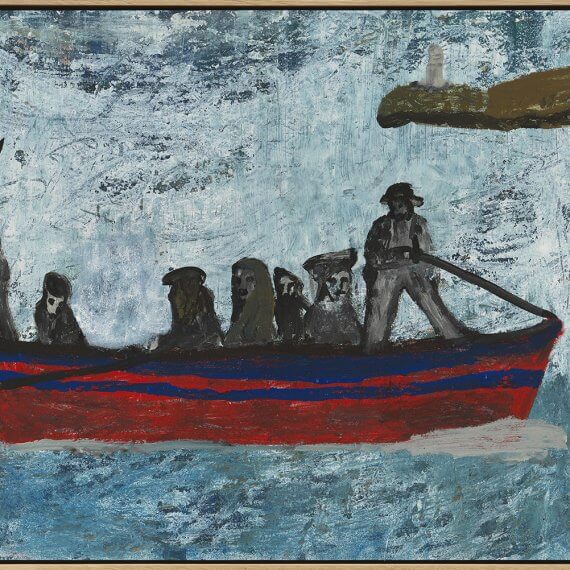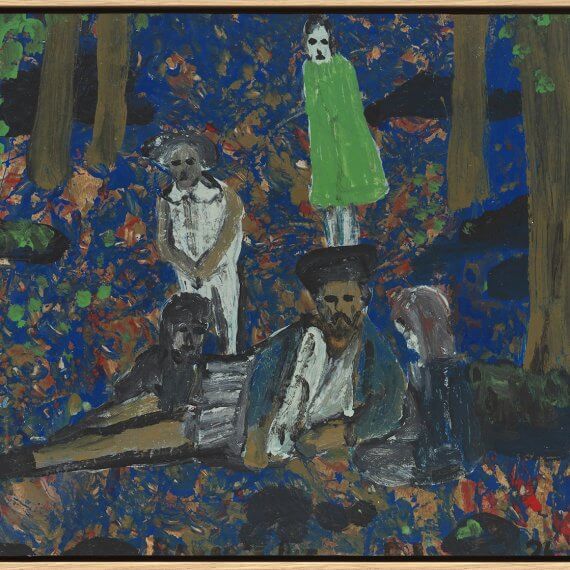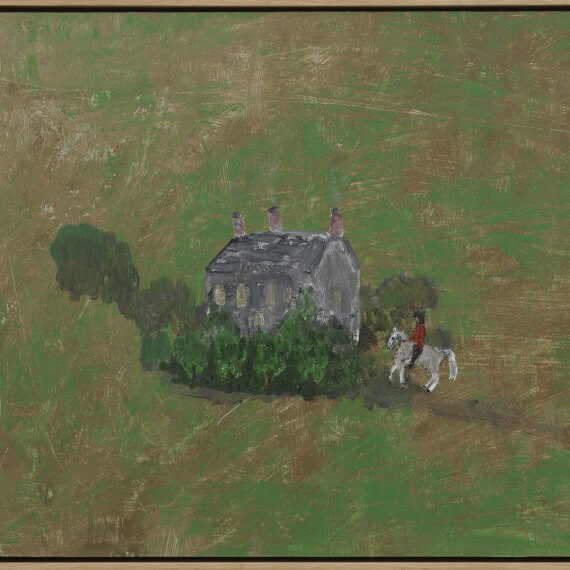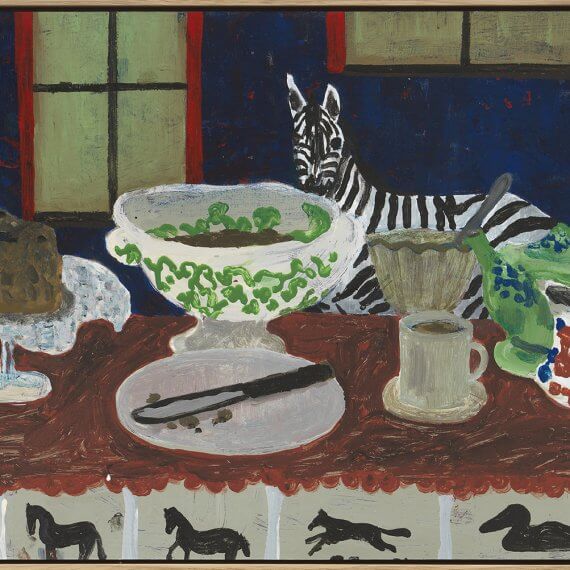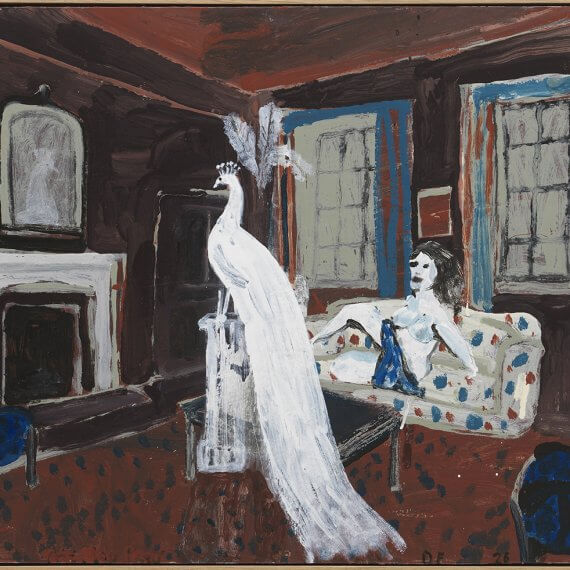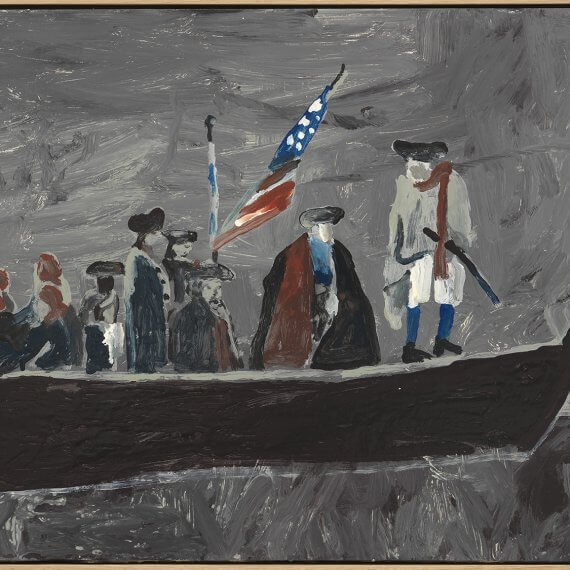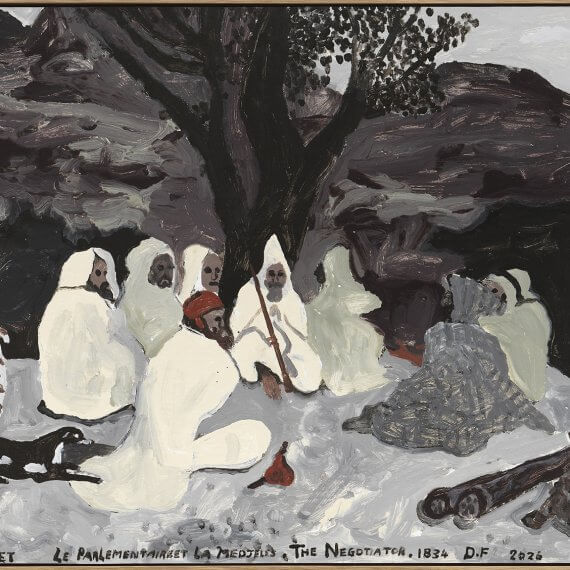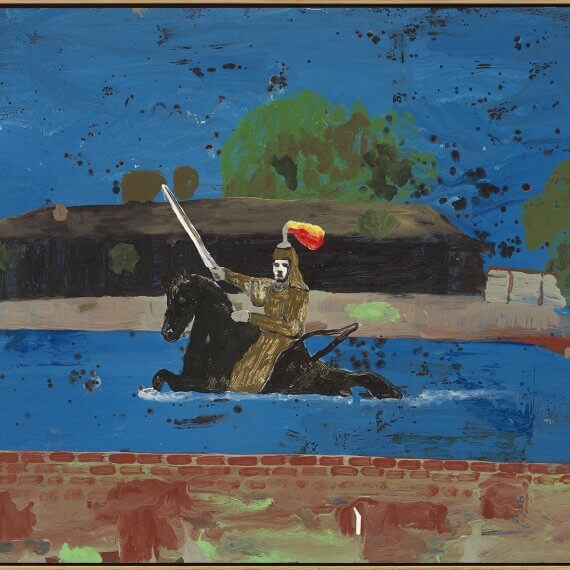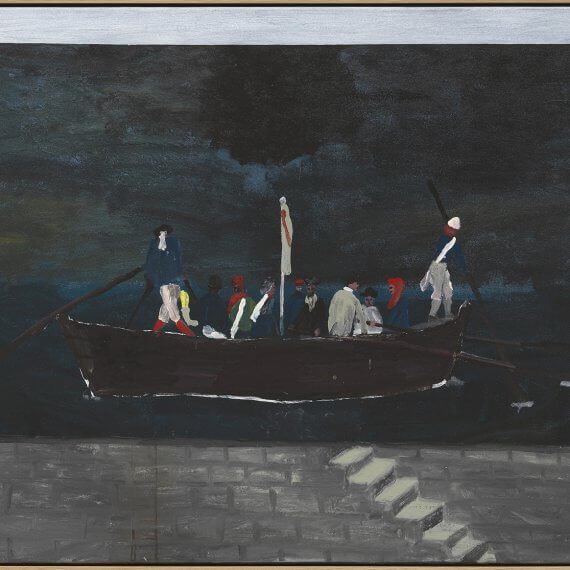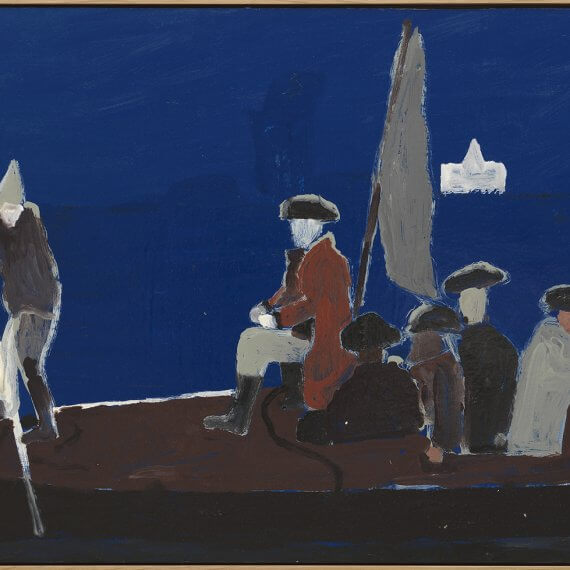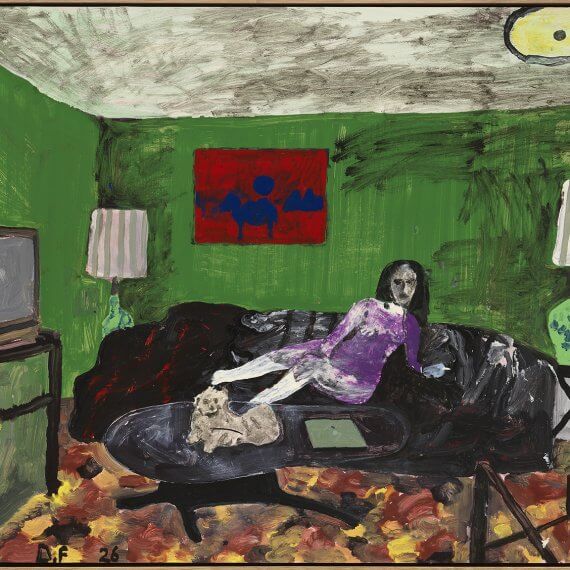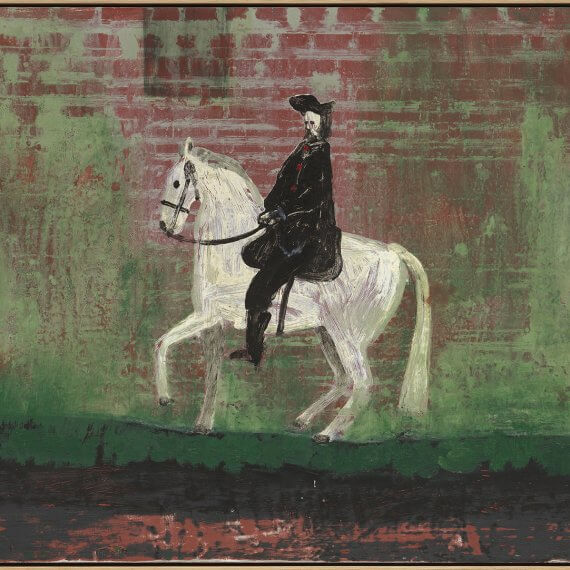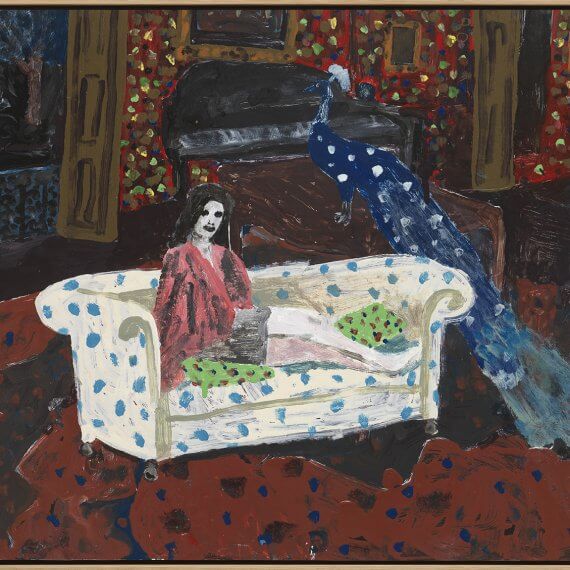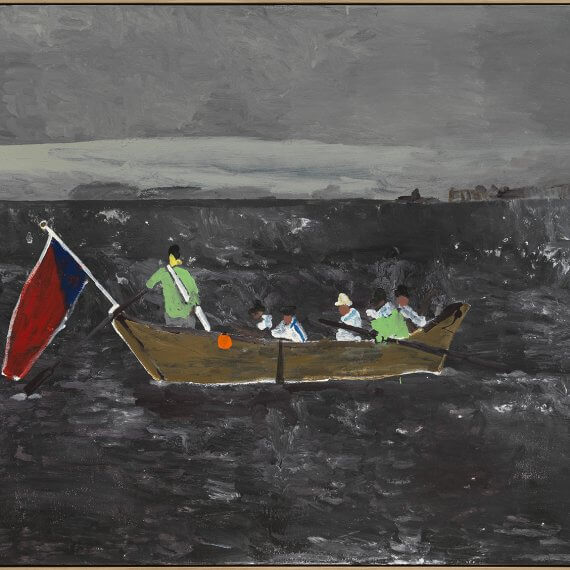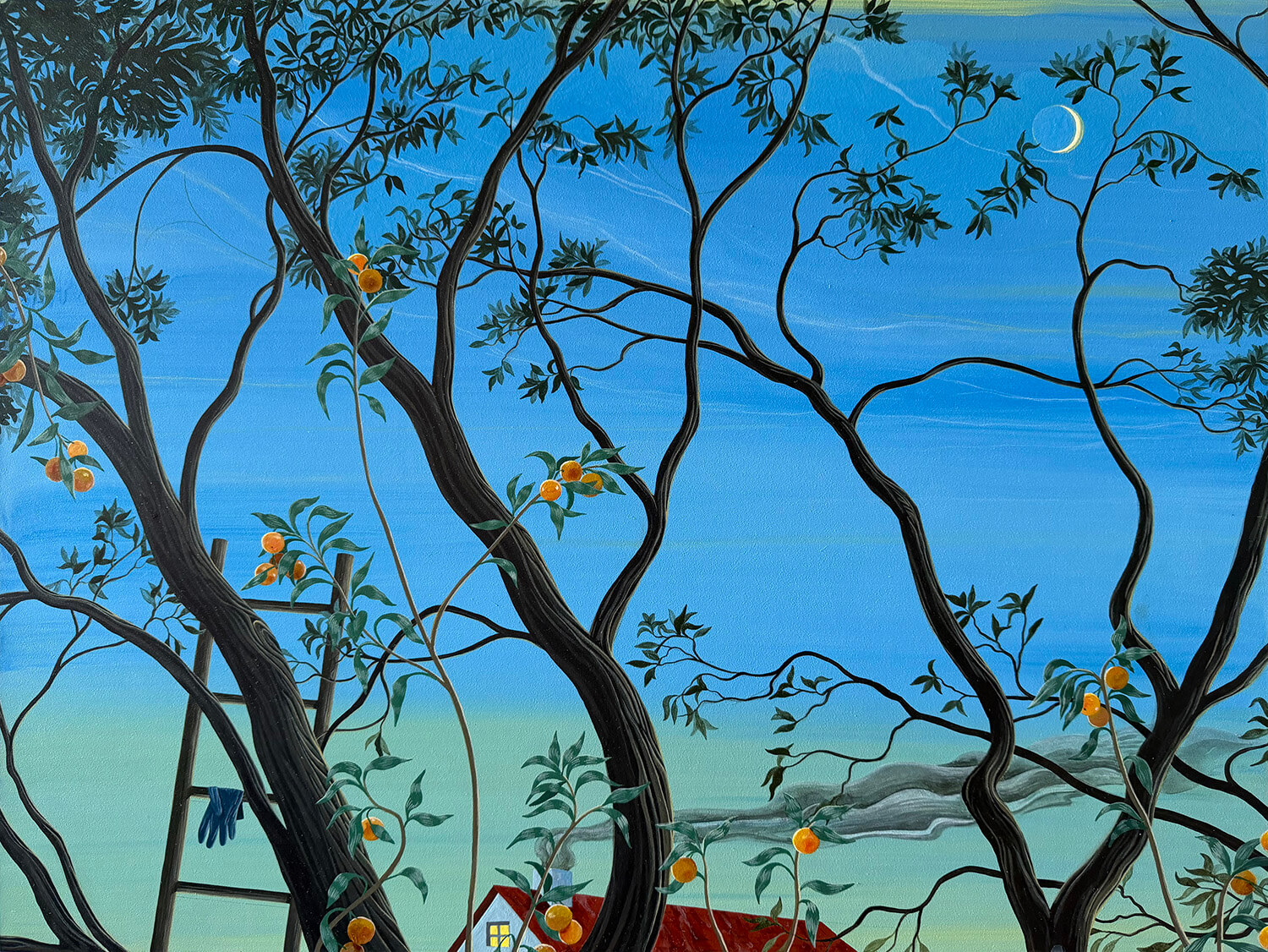
Azadeh Nia, Through the Orange Trees, 2026, acrylic on panel, 18 x 24 in. (45.7 x 61 cm.)
December 9, 2026-January 13, 2027
Alexander Berggruen is pleased to present Azadeh Nia: Blue Hour, the gallery’s first solo exhibition with the artist. This exhibition will open Wednesday, December 9 with a 6-8 pm reception at the gallery (1018 Madison Avenue, Floor 3, New York, NY).
Azadeh Nia paints precise, imagined landscapes that hint at human influence and verge on surreal, dystopian portrayals of modern life. Inspired by the landscape of her home in Tehran, Iran, often present in her work are Tehran’s prominent silent volcano Mount Damavand, orange trees, rolling hills, and gardens. These idyllic natural elements are met with both flourishing and abandoned urban artifacts, collapsing various timescales into one image.
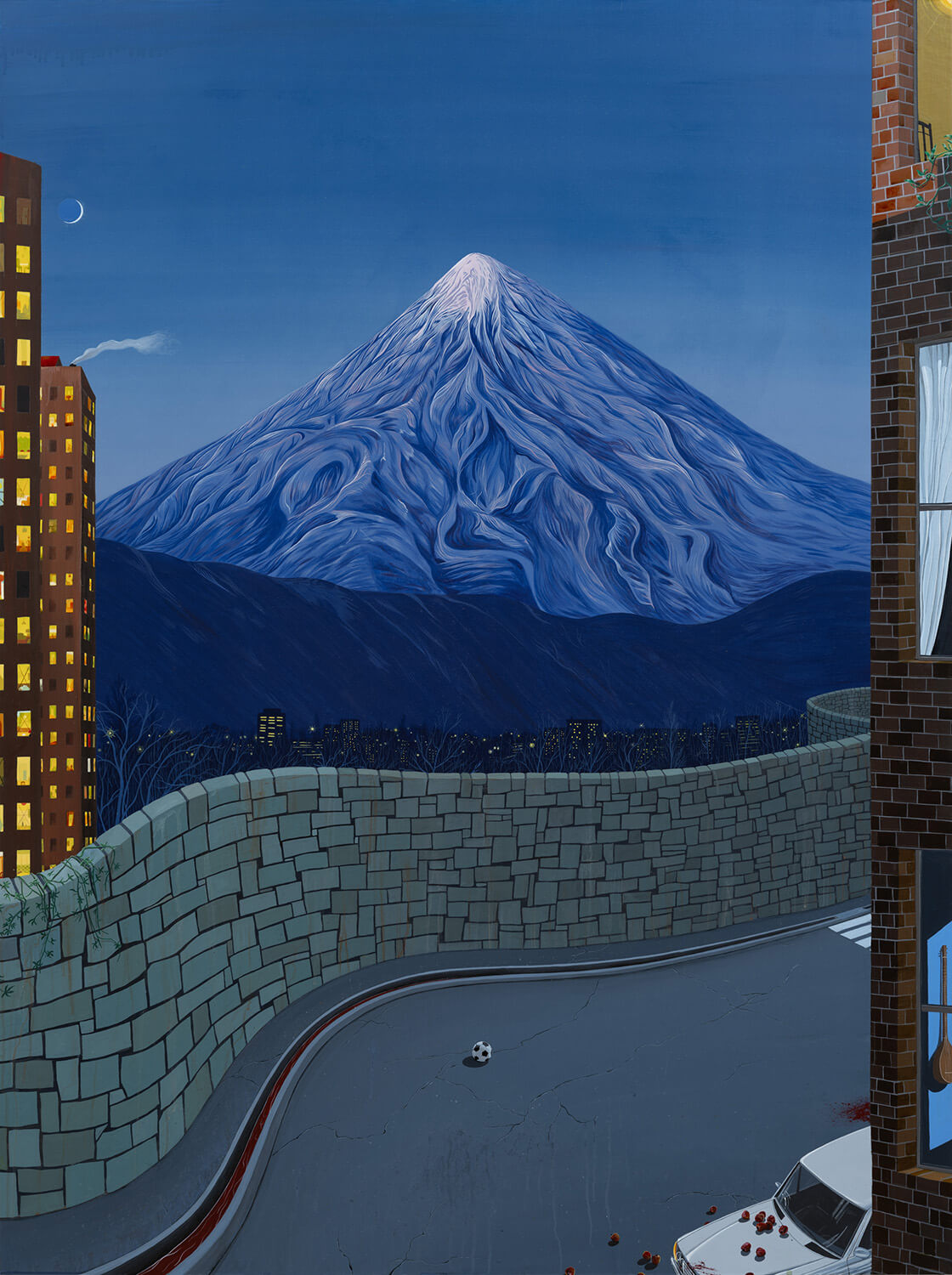
Azadeh Nia, Blue Hour, 2026, acrylic on panel, 48 x 36 in. (121.9 x 91.4 cm.)
While Nia painted this body of work from her home in Brooklyn, Iran moved through an uprising, a brutal crackdown, and war. She received images of violence and loss slowly, when internet connection in Iran allowed. Speaking about the paintings she produced during this time, she stated, “These imagined landscapes grew out of that grief, as well as a more enduring fascination with nature, ruins, and the passage of time. I am drawn to the fragile and the fading, to the possibility that what appears to be an ending might also contain the beginnings of something else.” Gardens bloom, and majestic skies perform over dilapidated relics. A tree grows out of a dark opening. Mountains stand firmly above quiet cities. In the distance of several works, paths and roads wind through nature like those in the films of Abbas Kiarostami. Although the details of the landscapes vary, symbols of persistence are recurrent motifs in Nia’s paintings.
Nia’s landscapes resist idealism through the inclusion of realistic and surreal gestures toward the individual human lives that existed there before and exist there now. In the exhibition’s eponymous painting Blue Hour, many lights are on in the apartment buildings, where a close viewer can see references to interiors, such as a Setar—an Iranian musical instrument—hanging inside someone’s window. At times, the hints at human presence are subtly violent. Also in the painting Blue Hour, apples lie on concrete beside blood spatter, and in In The Mountains, Flower By Flower, They’re Planting The Sun, a car burns in the distance. At other times, the gestures are mercurial. There are holes in the ground in Nearly There and Farda. In Playground, a chain link swing remains still, even amidst a wind that moves the ribbons on a scooter in the foreground and smoke in the distance. Informed in part by photographers of disjointed daily life like Julie Blackmon, Nia’s scenes too offer a staged, structured, surreal portrayal of domestic life.
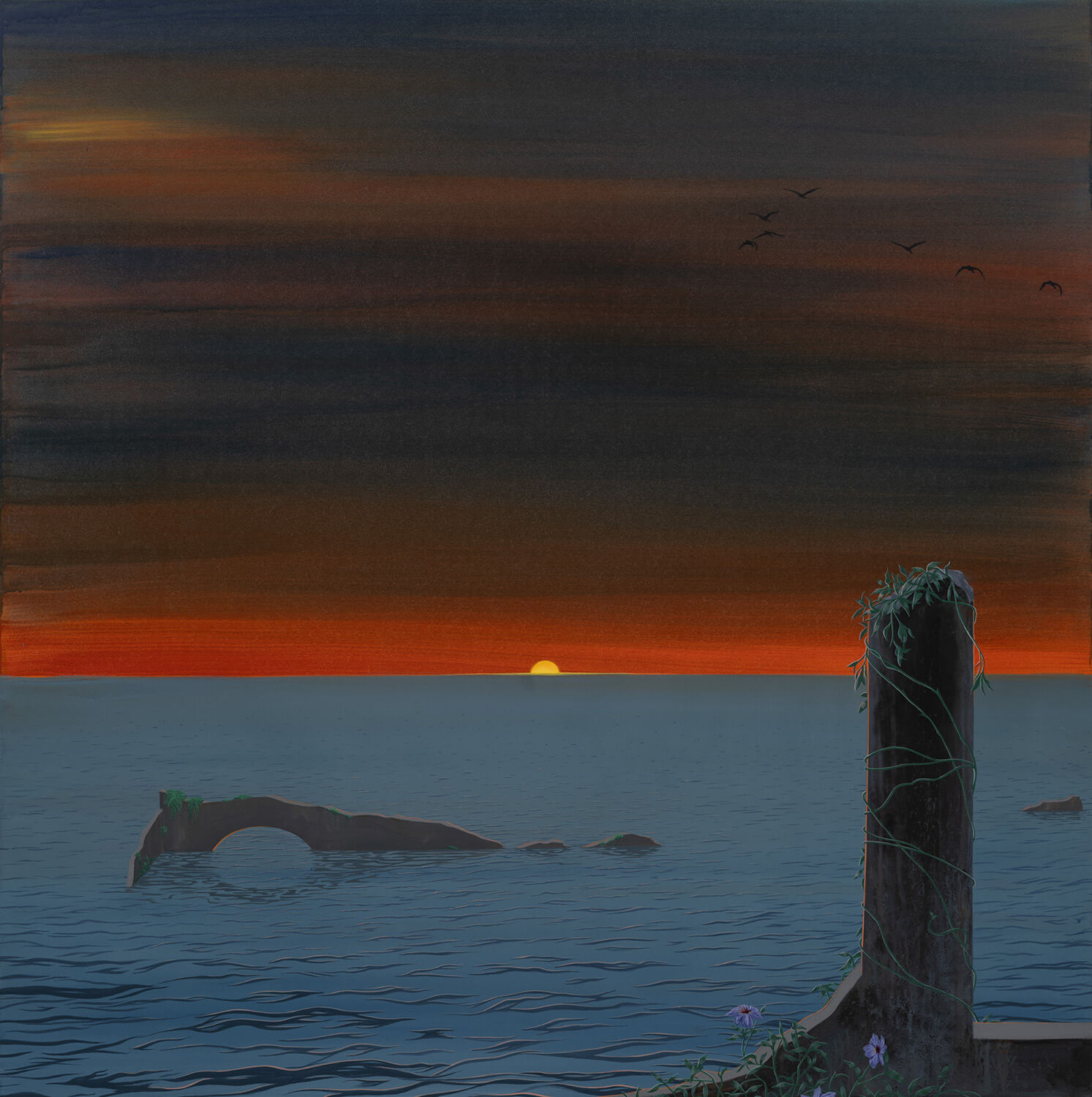
Azadeh Nia, Migration, 2026, acrylic on panel, 30 x 30 in. (76.2 x 76.2 cm.)
Working intuitively from memory and imagination, Nia’s depictions of nature and daily life are inspired by her own experiences in Iran and in New York City. Unable to visit Iran amidst political turmoil, Nasrollah Kasraian’s photobook Damavand, which features a collection of images of the titular mountain, was a key reference to Nia. Working in this manner allowed Nia the freedom to infuse her paintings with surrealism. In Two Skies, a mountain landscape under a blue sky is cleaved as it gives way to the side of a building in an urban environment under a bruised purple sky, much like the inconsistent light in paintings by René Magritte. Similarly, her painting Lightning Over Water depicts red roses emerging from the snow and lightning in the distance, both rare occurrences in the winter. Akin to Gertrude Abercrombie, Nia peppers surrealism into her paintings sparsely and often over recurrent motifs. Most common for Nia are the crumbling relics that emerge in surprising places, such as out of the water in Migration. Ladders are another recurring motif, emerging from or descending beyond the edges of the composition, an invitation to imagine the past and the future.
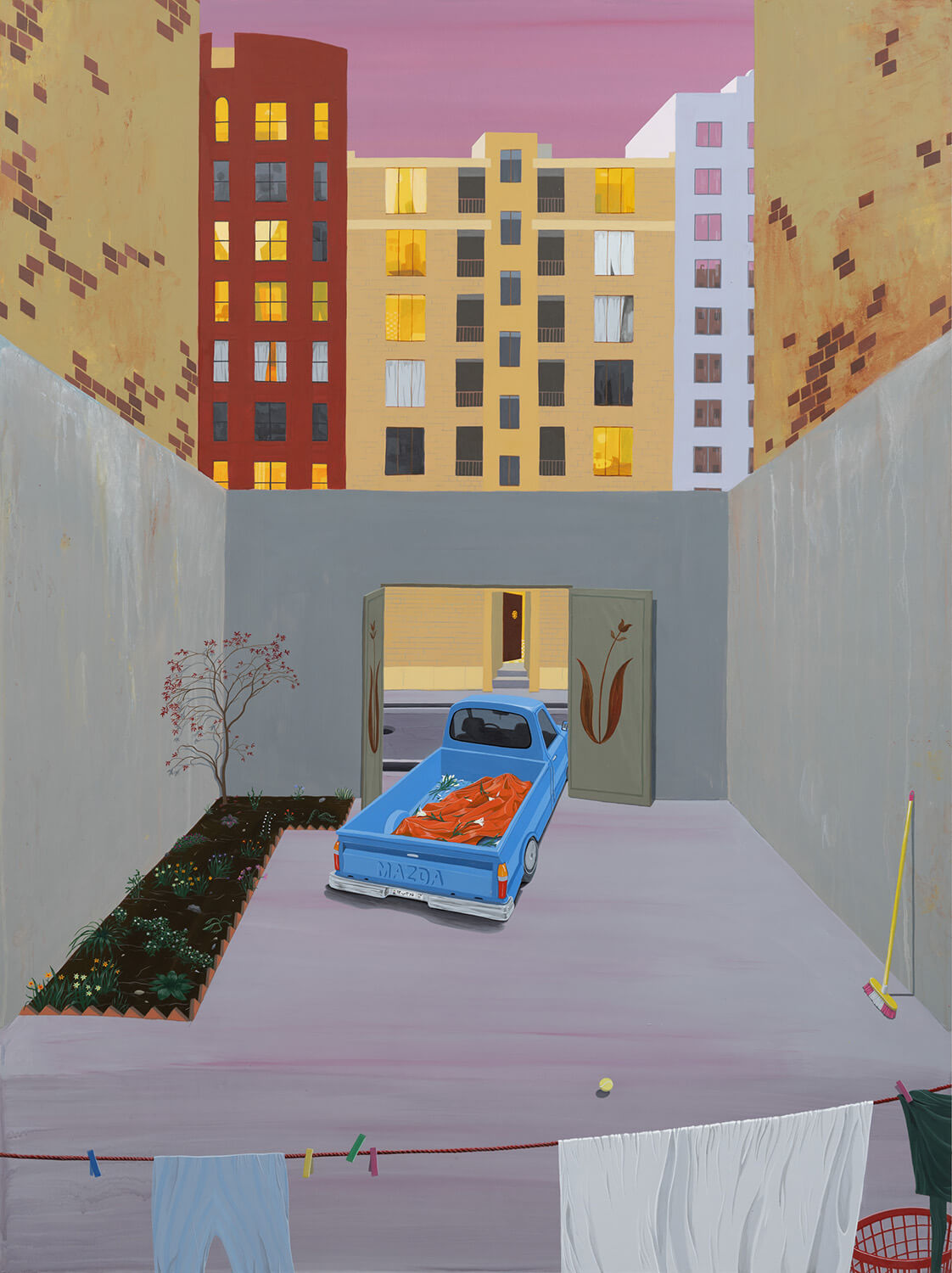
Azadeh Nia, Homecoming, 2026, acrylic on panel, 48 x 36 in. (121.9 x 91.4 cm.)
A watery first layer of paint is the foundation for Nia’s work. Occasionally, this can be seen in loose, dripping or seeping paint within broad expanses like the sky or a wall. Then, Nia refines the scene with precise details, often dextrously using miniscule brushes. The flat surface of the wood panel amplifies her precision. Trees and buildings often act as asymmetrical framing devices in Nia’s paintings. Her approach to buildings and manmade structures emphasizes their sharp edges and angles, revealing their underlying geometric forms, similar to the cityscapes of George Ault.
Nia’s paintings invite contemplation about the coexistence of fragility and stability within nature and human life. Where flowers, fruits, and the rising and setting of the sun are fleeting, elements like mountains and stars in the sky are more constant. The mountains and built forms remind a viewer of the immense force that created them and that resilience is dynamic. Speaking about this body of work, Nia stated, “These paintings exist in the suspended moment between an ending and a beginning, where loss remains present but life, against all odds, finds a way to return.”
Press release by Kirsten Cave, adapted from the artist’s statement.
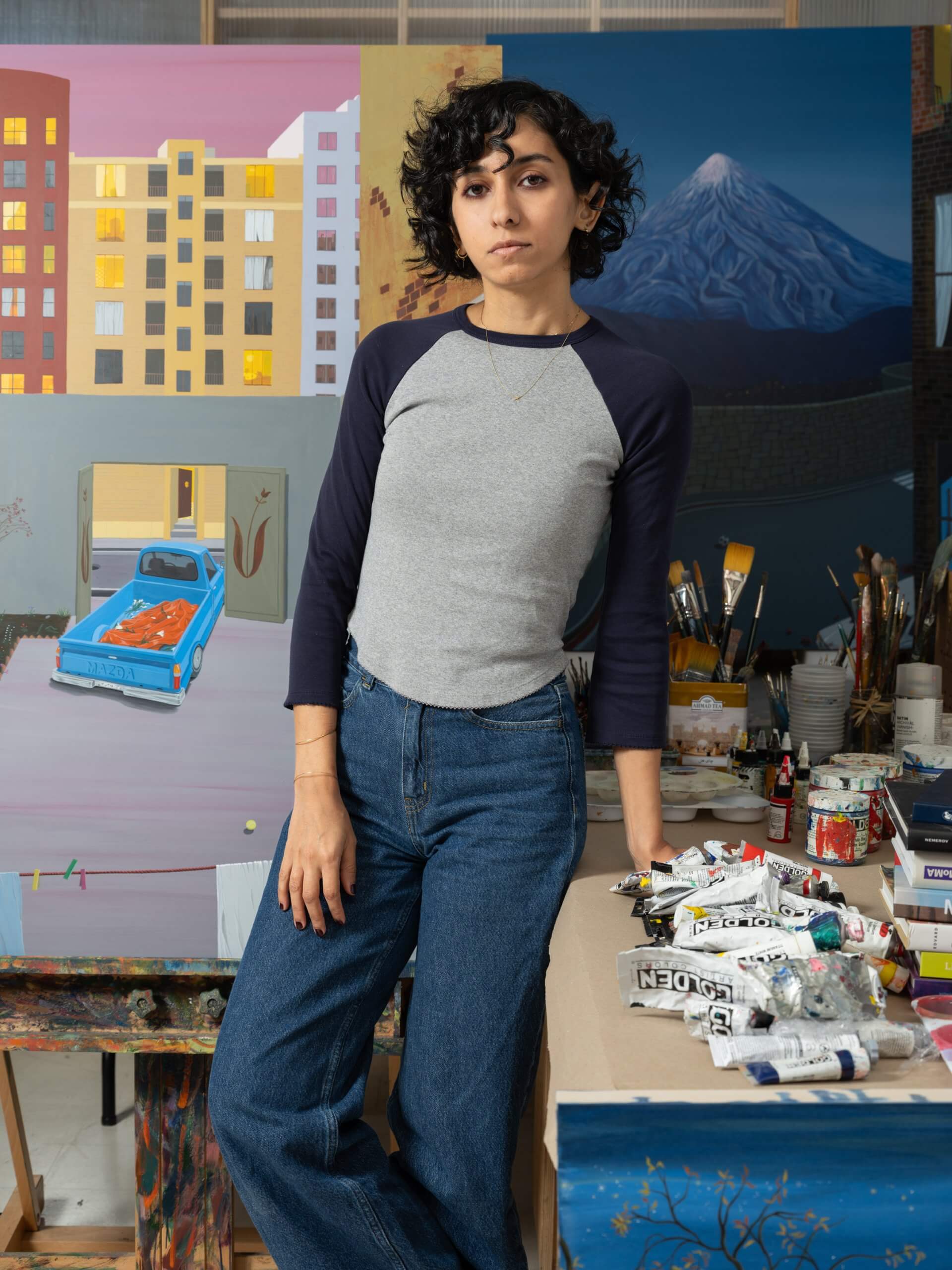
Azadeh Nia in the studio, Brooklyn, NY, 2026. Photo: Daniel Greer
Azadeh Nia (b. 1988, Tehran, Iran) received an MFA from the University of The Arts London and a BA from University of Science And Culture in Tehran, Iran. Her work has been exhibited at the Dallas Art Fair with Alexander Berggruen; Fridman Gallery, New York, NY; Hashimoto Contemporary, New York, NY; Wassaic Project, Wassaic, NY; Gallery Fritz, Santa Fe, NM; Mill Contemporary, Santa Fe, NM; and Simons Contemporary, London, UK. Nia was an artist in residence at Silver Arts Projects, New York, NY; Wassaic Project Artist Residency, NY; and Ucross Residency, WY. She lives and works in Brooklyn, NY.
This is the gallery’s first solo show with the artist following her inclusion in the gallery’s group presentation at the Dallas Art Fair in 2025.
The exhibition will be on view December 9, 2026-January 13, 2027. For all inquiries, please contact info@alexanderberggruen.com.