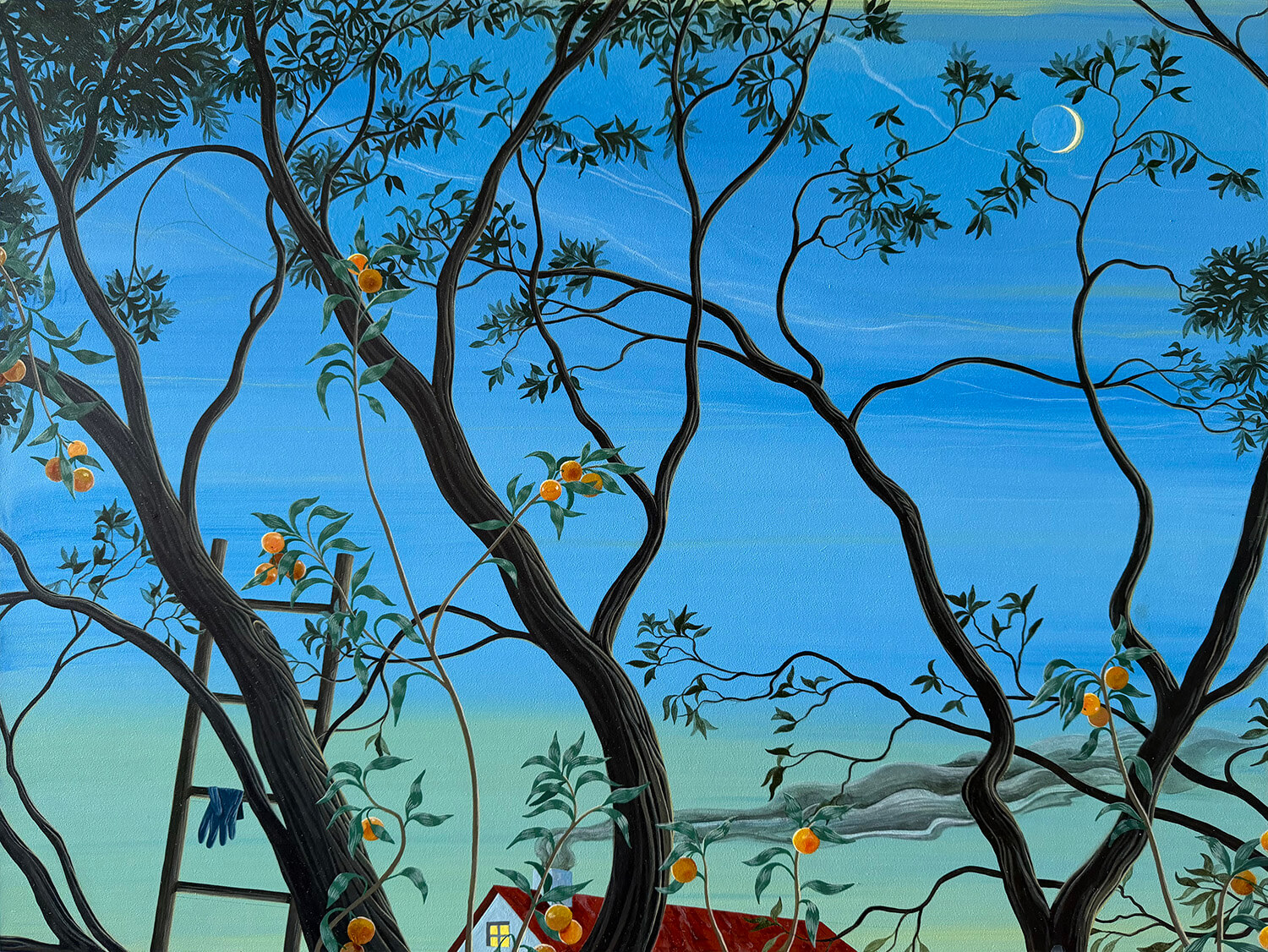
Azadeh Nia, Through the Orange Trees, 2026, acrylic on panel, 18 x 24 in. (45.7 x 61 cm.)
December 9, 2026-January 13, 2027
EXHIBITION CHECKLIST:
https://bit.ly/BrittneyLeeanneWilliams-Huddle-Checklist
Alexander Berggruen is pleased to present the gallery’s first solo exhibition with Azadeh Nia. This exhibition will open Wednesday, December 9 with a 6-8 pm reception at the gallery (1018 Madison Avenue, Floor 3, New York, NY).
Azadeh Nia (b. 1988, Tehran, Iran) received an MFA from the University of The Arts London and a BA from University of Science And Culture in Tehran, Iran. Her work has been exhibited at the Dallas Art Fair with Alexander Berggruen; Fridman Gallery, New York, NY; Hashimoto Contemporary, New York, NY; Wassaic Project, Wassaic, NY; Gallery Fritz, Santa Fe, NM; Mill Contemporary, Santa Fe, NM; and Simons Contemporary, London, UK. Nia was an artist in residence at Silver Arts Projects, New York, NY and Wassaic Project Artist Residency, NY. She lives and works in Brooklyn, NY.
Alexander Berggruen is pleased to present our first solo show with Emma Fineman. This exhibition will open Tuesday, May 19, 2026 with a 6-8 pm reception at the gallery (1018 Madison Avenue, Floor 3, New York, NY).
For her solo show Devotion, Emma Fineman presents a new body of psychological paintings where queerness is not exiled from divinity but placed at its very center. Grounded in materiality, Fineman’s symbolic, figurative works incorporate gestural brushstrokes, original prose texts, and thick surface textures.
Presented at Alexander Berggruen in New York, the exhibition comes just months after the Trump administration removed the Pride flag from Stonewall National Monument. Fineman centers motifs of hope and love, offering a celebration of queer liberation at a time when its expression is increasingly challenged. She posits that, despite enduring religious ostracism, few things are more holy than the purity of love born out of queerness, both towards self and others.
Though raised within Jewish mysticism, Fineman draws on a range of spiritual traditions. Developed in response to her recent work The Genesis Project, this exhibition explores universal themes drawn from varying biblical stories as an entry point to intuition, acceptance, self-assurance, and exploration. Often, the figures’ journeys lead to abundance, rendered through light and lush, fruitful scenes of the natural world. In her painting Low Hanging Fruit, Fineman repositions Eve as though she has stirred from a dream; her fixed focus on the apple becomes a conversation about desire as an usher to remembering knowledge lost in the waking. We see Eve rising from a celestial river, the pattern of which recurs throughout the exhibition, including in the sky in Lambda (RYB). Repeated forms such as these thread through the paintings, offering windows into alternative perspectives within a shared world.
Fineman develops a personal iconography by reconfiguring signs and symbols that recur across faiths and histories. The lambda—a Greek character associated with unity and queer liberation—is repositioned as a central motif throughout the exhibition. Depicted in the eponymous painting Lambda (RYB), Fineman situates the symbol within yonic forms referencing the devotional imagery of Madonnas. Turned on its side in Undercurrent the motif transforms into an all-seeing eye and appears again as a gathering of figural forms clustered behind a window in Ark.
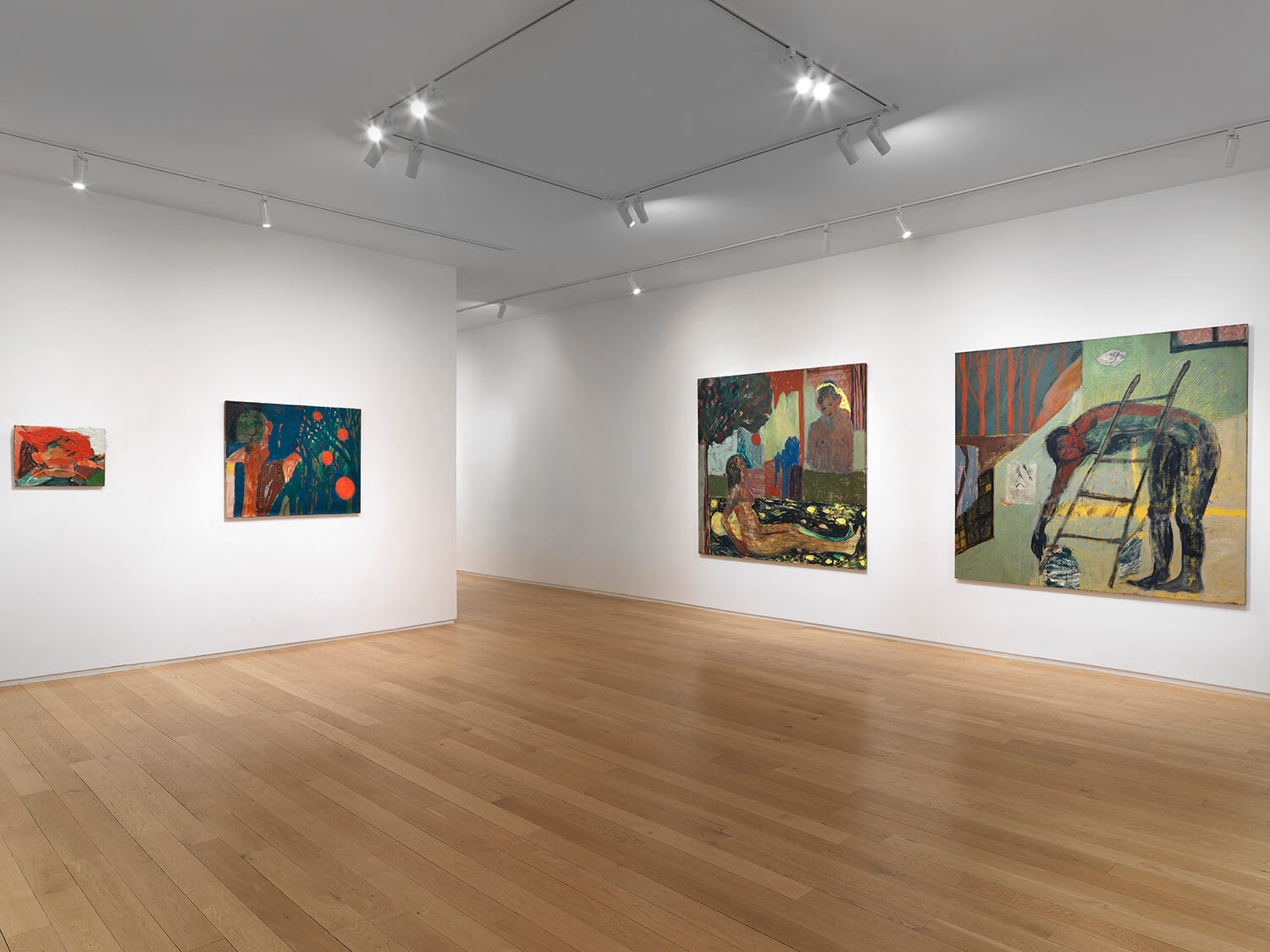
Born and raised in the Bay Area, Fineman’s painterly structures recall the Bay Area Figurative Movement, particularly Richard Diebenkorn. Fineman balances the energetic vibrancy of vermilion against swathes of inky and mysterious wonder found in the depths of Phthalo green. She oscillates between ebullient and shadowed palettes, reflecting a journey toward embracing the full spectrum of the self. Through expressive applications of oil, encaustic, hessian, newsprint, and charcoal, Fineman conjures figures that are at once ghostly and monolithic.
Through gestures toward revisionist history and autobiography, Fineman opens a psychological space that engenders curiosity. Emerging from the space between representation and abstraction, Fineman’s intimate narratives encourage viewers to follow intuition into the reaches of their own most personal truths.
Press release by Kirsten Cave, adapted from the artist’s statement.
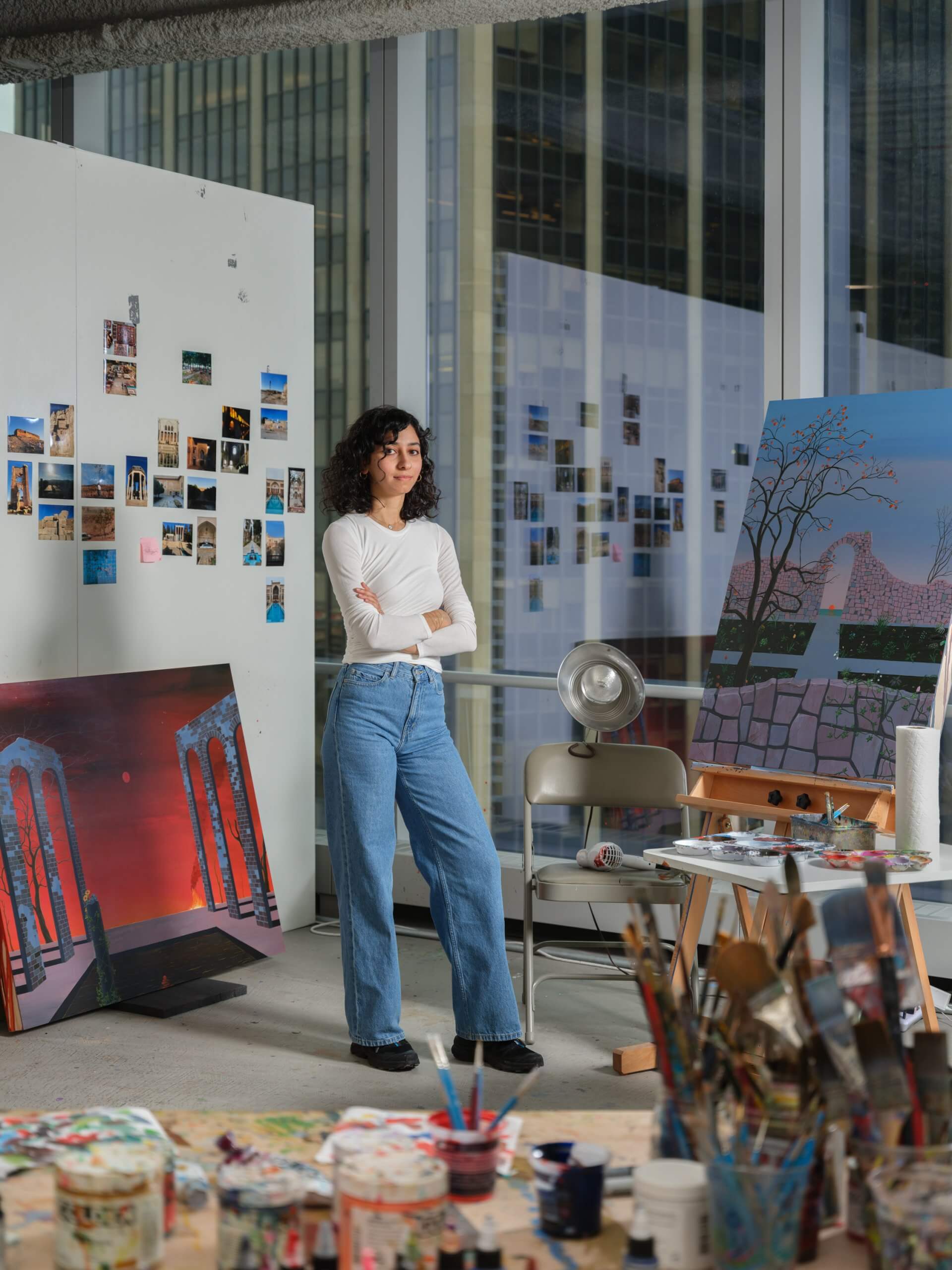
Azadeh Nia, New York, NY, 2025. Photo: Daniel Greer
Azadeh Nia, New York, NY, 2025. Photo: Daniel Greer
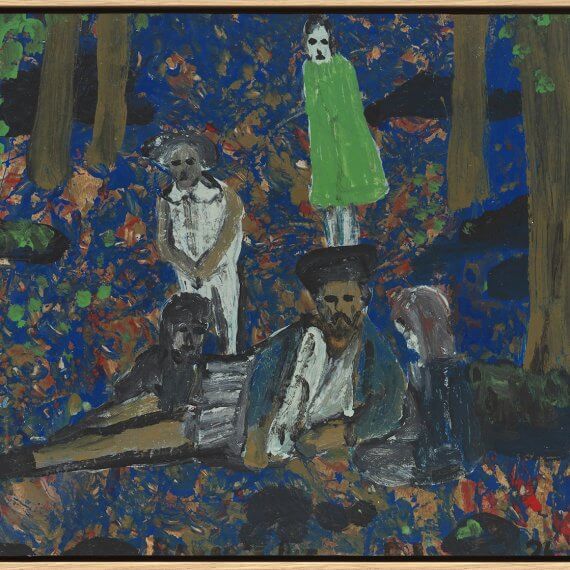
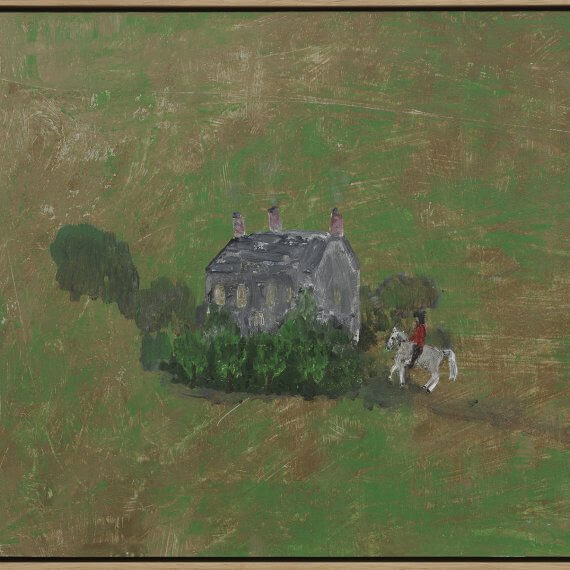
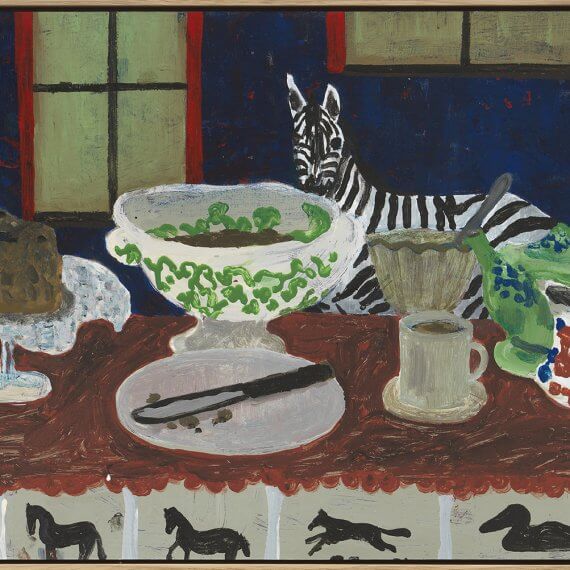
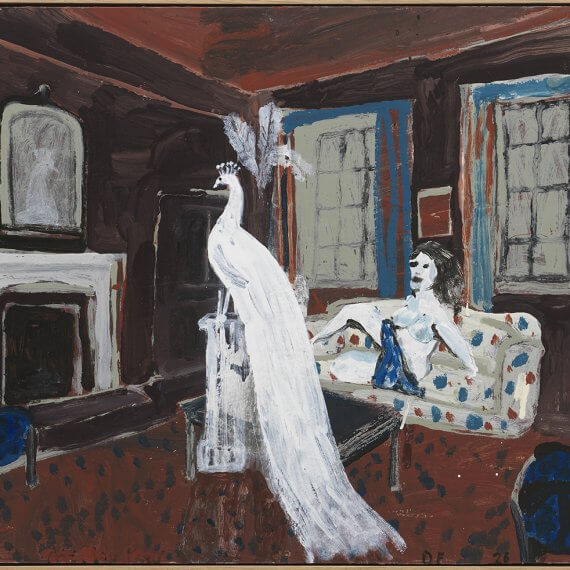
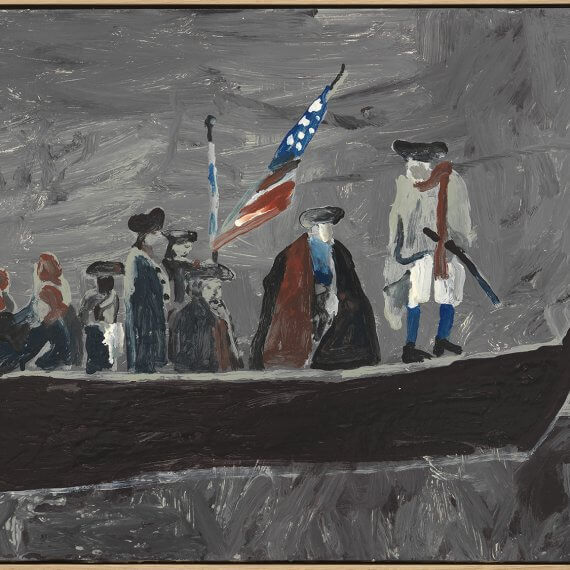
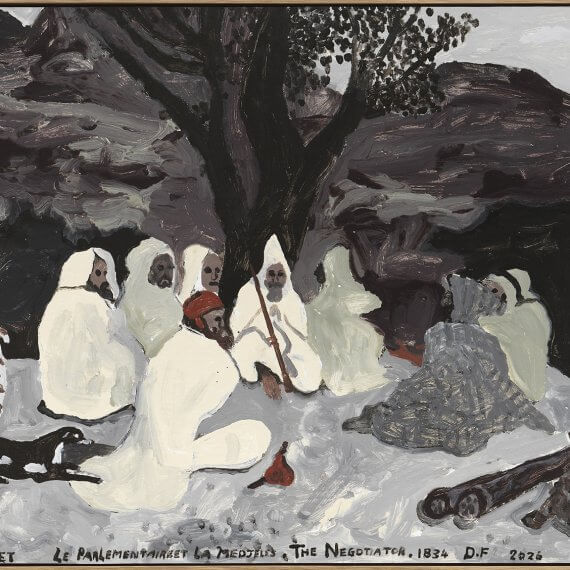
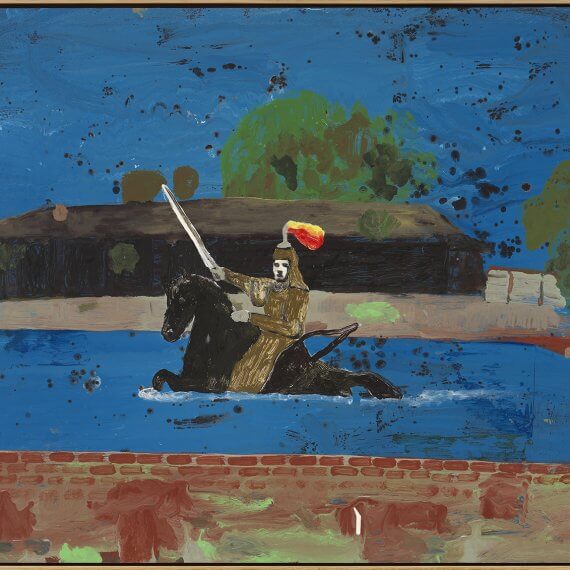
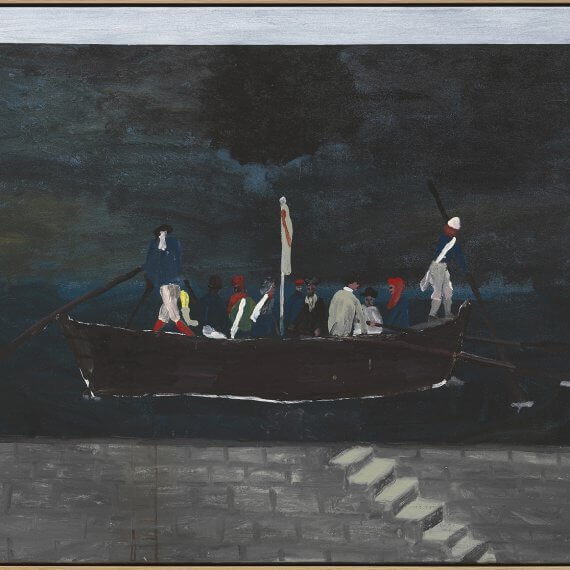
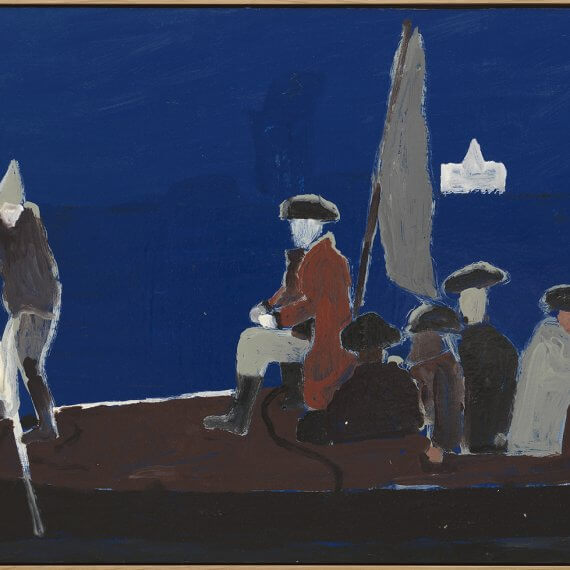
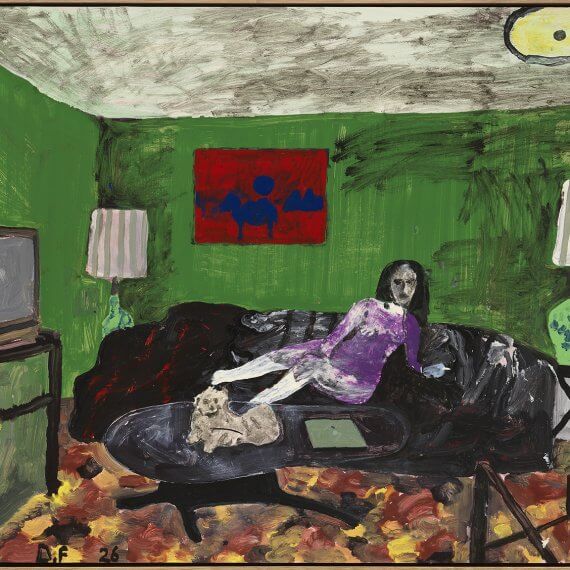
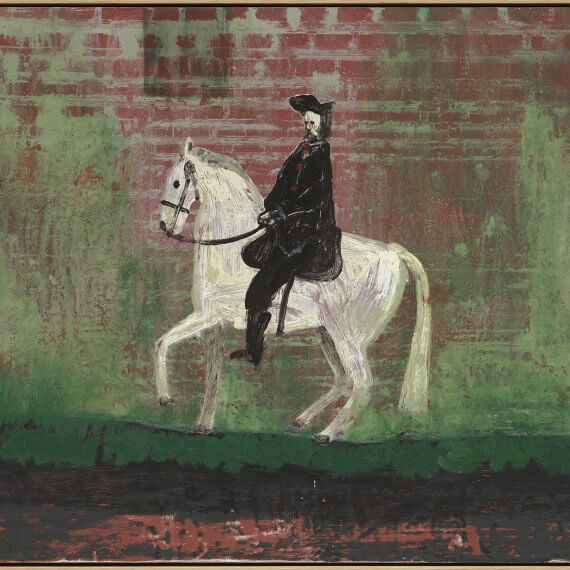
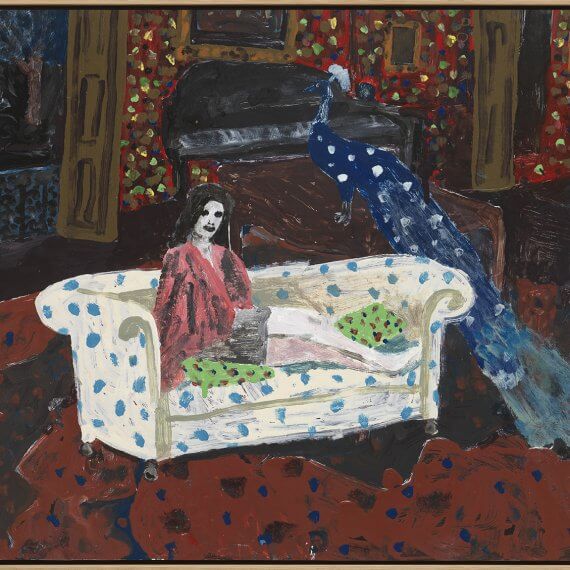
Danny Fox (b. 1986, St. Ives of Cornwall, England), a self-taught artist, held his first museum solo exhibition at Levinsky Gallery, The University of Plymouth, UK in 2025. He has exhibited internationally at Chinatown Taylor, Los Angeles, CA; Alexander Berggruen, New York, NY; Hannah Barry Gallery, London, UK; The Saatchi Gallery, London, UK; Jeffrey Deitch, Los Angeles, CA; Berggruen Gallery, San Francisco, CA; Zidoun-Bossuyt Gallery, Luxembourg; Yuz Project Space of Art, Shanghai, CN; and V1 Gallery, Copenhagen, Denmark, among others. The artist’s work is included in the collections of the Denver Art Museum, CO; Start Museum, Shanghai, CN; The Nixon Collection, London, UK; and the Yuz Foundation, Shanghai, CN. Fox lives and works in St. Ives of Cornwall, England.
This is the gallery’s second solo show with the artist following Danny Fox: The Sweet and Burning Hills (January 12-February 26, 2021) and Fox’s inclusion in the gallery’s group shows Levity (July 13-August 29, 2023), Animal Kingdom (June 26-August 29, 2020), and Words (October 11-November 26, 2019). Alexander Berggruen represents the artist.
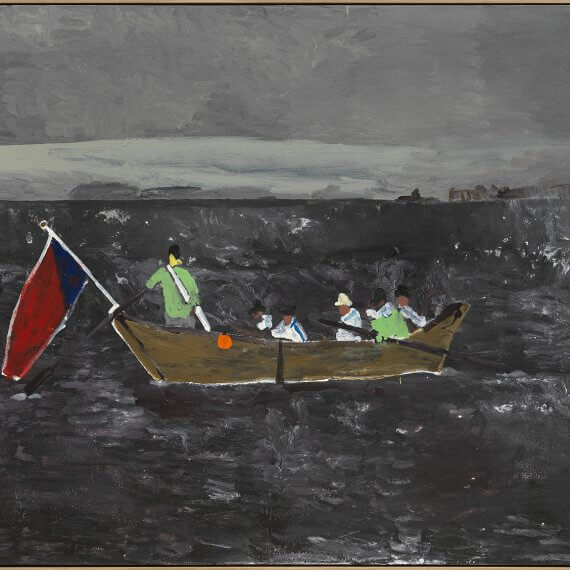
On the occasion of Alexander Berggruen’s current exhibition Emma Fineman: Devotion (May 19-June 24, 2026), we’re pleased to share a video of the artist speaking about her work in her studio. Video by Dina Paola Rodriguez
A neglected stone cottage in his native windswept Cornwall beckoned to the artist Danny Fox, who put his years in sunny Los Angeles behind him and, with the assistance of friends and reclaimed materials, created a home for himself and the folk-art objects that have shaped his work.
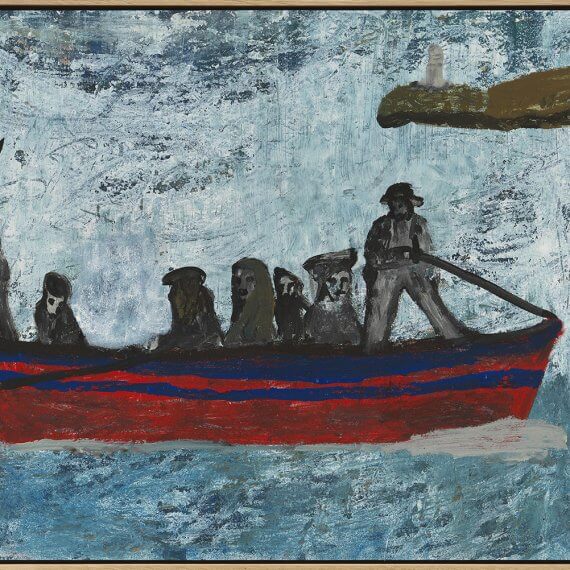
Fox was raised in nearby St Ives, the tiny fishing village where his family home was a few doors down from where celebrated naive artist Alfred Wallis once lived. Having made art from an early age, at 17 Fox left home for London in search of glory. There began a nomadic period in which he moved between jobs – labourer, pot washer, decorator, barman – while still painting through the nights, a habit he keeps to this day. London was followed by stints in Hastings and Cardiff, before he eventually returned to the capital.
Throughout the house, salvaged pieces and vernacular craftsmanship reveal an artist whose life has been shaped as much by collecting and scavenging as by painting. Works by Henry Taylor, Eddie Martinez and Wes Lang hang among home-made sculptures and curious finds, while a rare work by Wallis provides a fitting anchor.
Danny Fox: Fata Morgana runs 9 September to 7 October 2026 at Alexander Berggruen, New York.
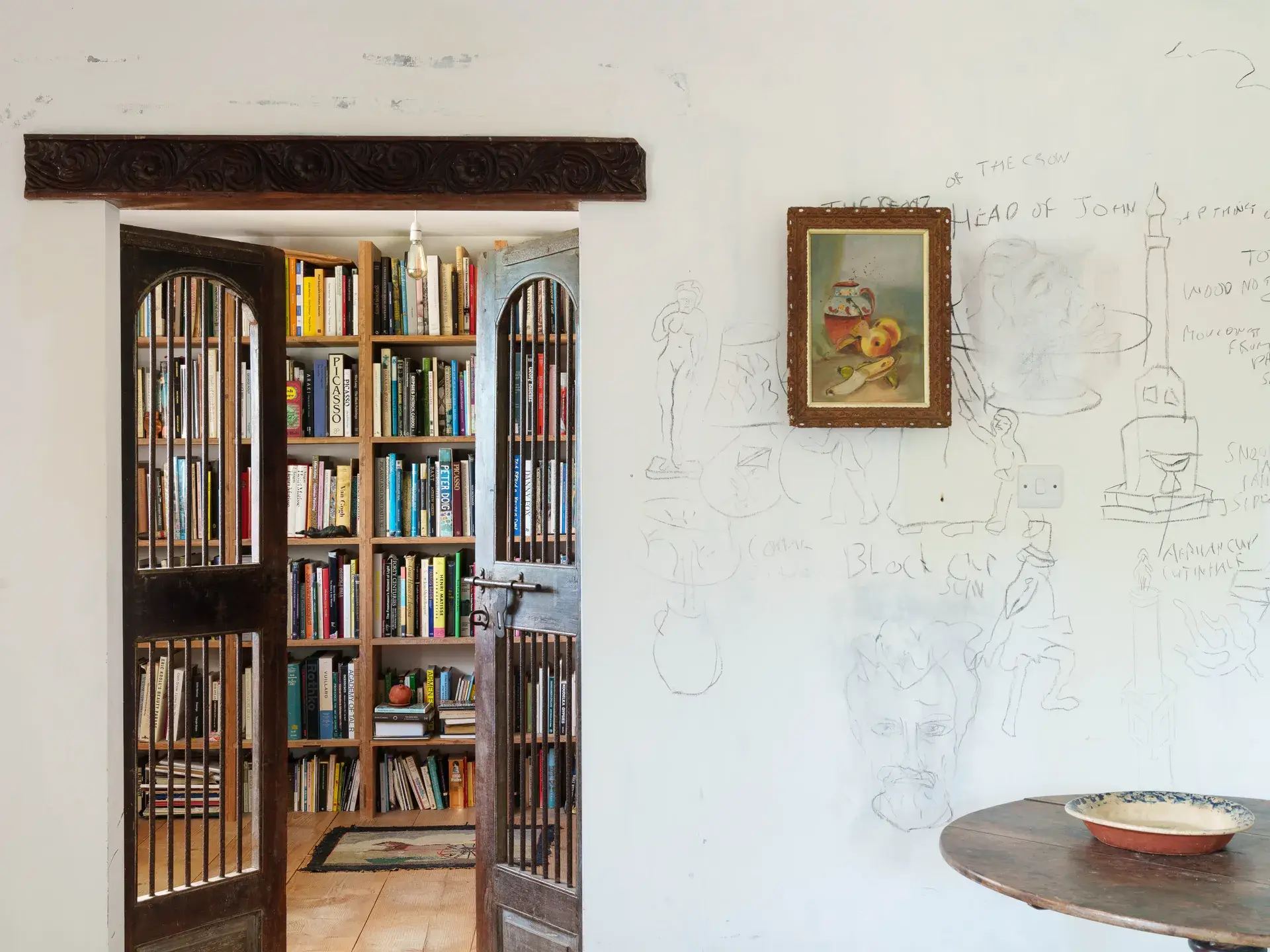
The library adjoins the master bedroom as seen through ‘jali’ gates and a carved lintel. On the floor is a hand hooked American rug. ‘There are drawings on the wall because I used this room as ceramic studio for a while,’ says Danny. Photography by Steve Tanner for World of Interiors.
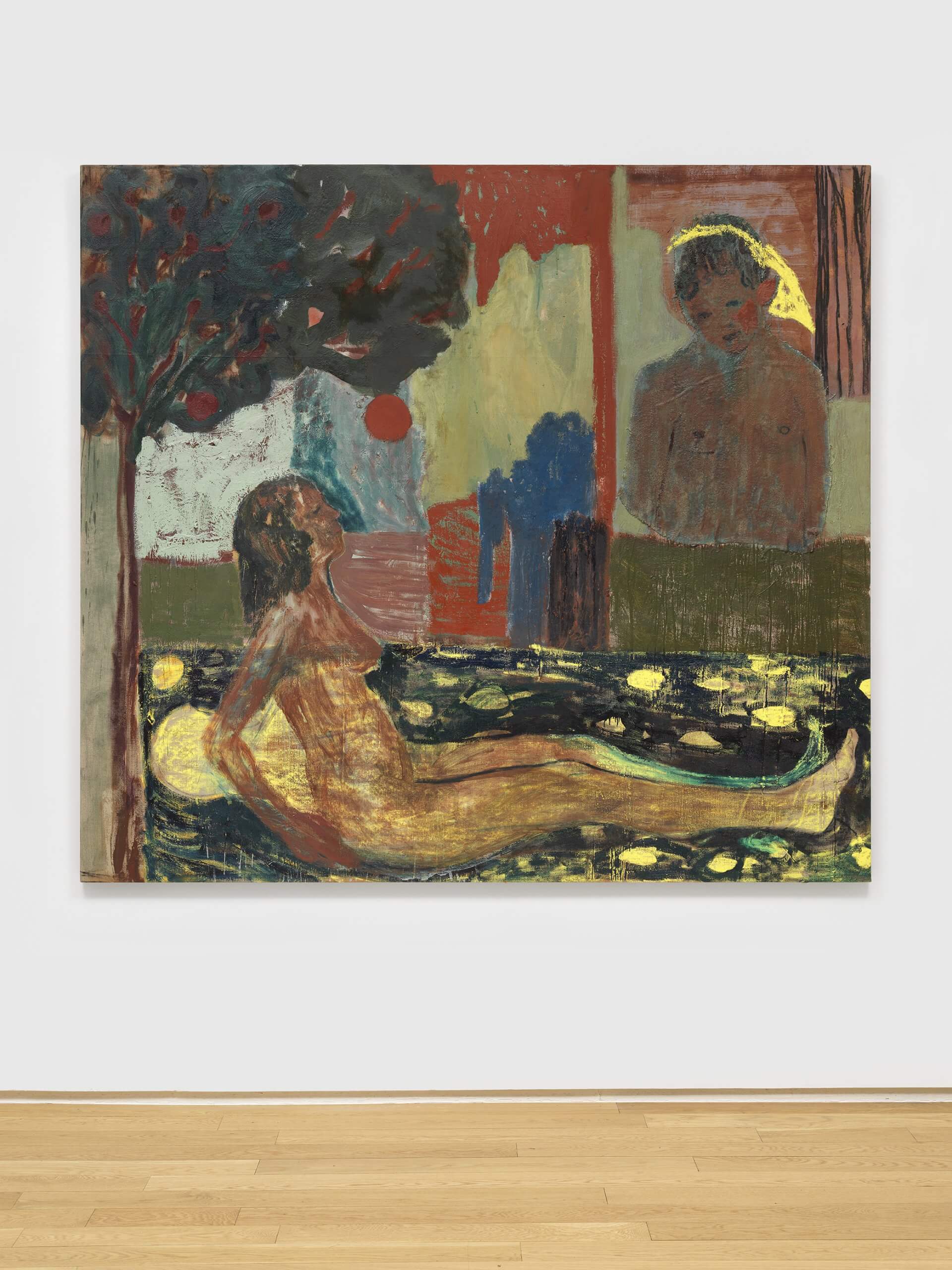
Now on view at Alexander Berggruen, Emma Fineman’s paintings appear, paradoxically, both solid and ethereal, as though made from a fusion of rock and vapor. The artist creates heft through architectonic composition and relief-like facture, often giving structure by dividing the image into discrete zones of color.
I see her work as not questing for knowledge but reveling in enigma, enacting what queer theorists such as Judith Butler and Michael Snediker have identified as more integrated ways of experiencing personhood, not divided between a true interior and a false surface. This is most evident in Lambda, where the central figure personifies the mutability of meaning that the painting’s form enacts. We see a beatific jade-colored face beneath what appears to be a partially lifted red mask. But while the woman’s left leg and nipple bear the same green hue, the limb does not seem to emerge from underneath the ruddy torso so much as extend from where the crimson expires at the hip. If anything, the nipple’s higher value and greater saturation drive it optically past the surrounding reds behind which we expect it to be lurking. Whereas we ordinarily think of masks as concealing faces, this happily doubled figure suggests two selves intertwining in a body divided, neither entity more real than the other. In this weighty but floating world, we need not mine for inner truth but allow ourselves to linger on the enigmatic surface.

Artist Stephanie Shih conjures a poignant domestic drama by recreating the symbols of temptation, vice, convenience and self-improvement that defined American life in the 1990s.
In Domestic Bliss, a tenderly realized portrait of American life in the 1990s at Alexander Berggruen in New York, the artist Stephanie Shih draws us into a fraught family narrative.
The artist builds the pieces by hand, using a fine brush to decorate their surfaces. There are subtle signs that each object is handmade, evoking the crafted pop sensibility of Corita Kent or Liza Lou — a slightly dappled finish here, a hint of hand lettering there. The net result is the uncanny feeling that the whole room has been seen, recorded, lost, then lovingly recreated, each element conjured by a human being with a memory that aches.
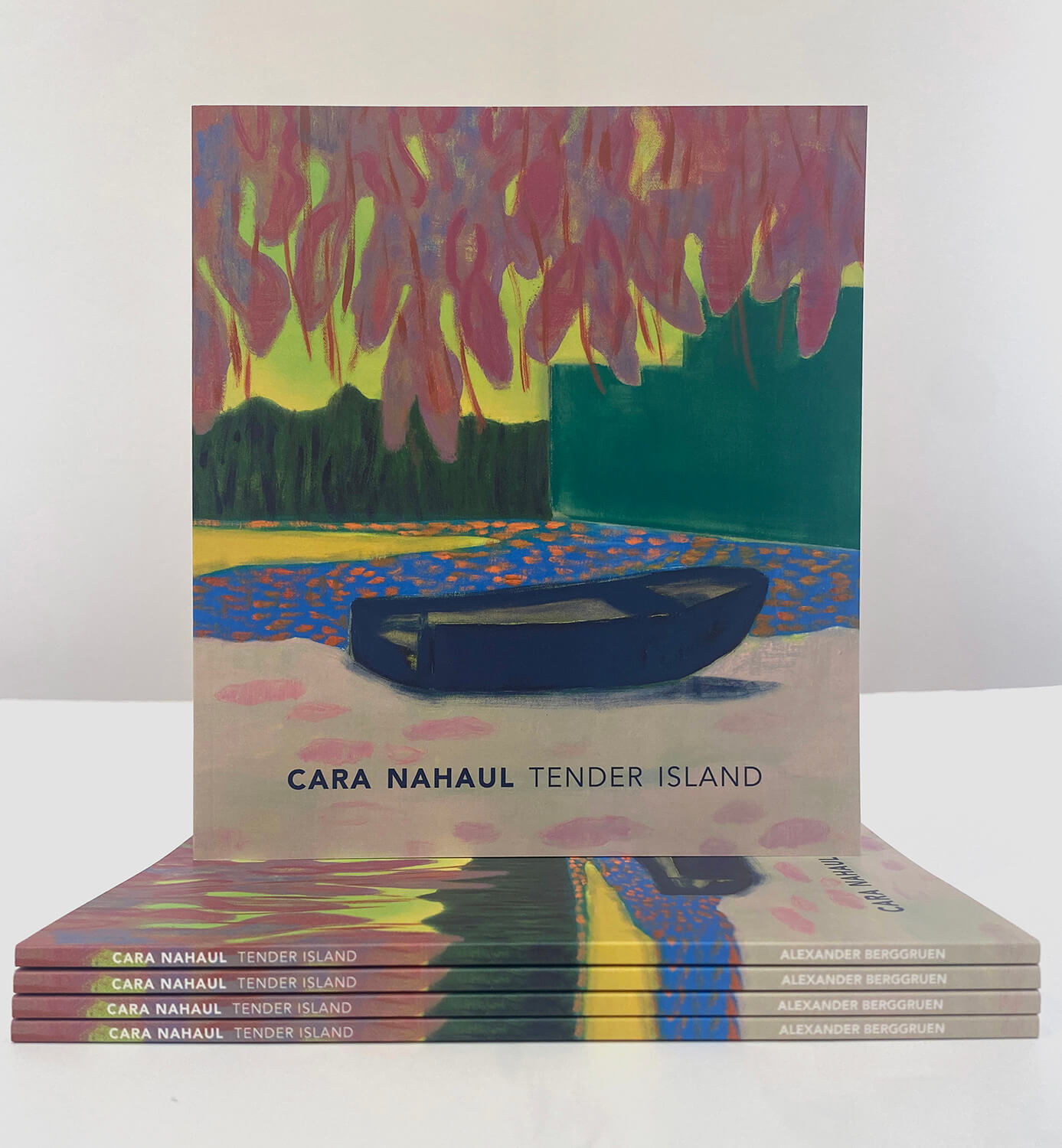
Cara Nahaul: Tender Island was published on the occasion of the gallery’s eponymous exhibition, which will run from April 10-May 8, 2024. This catalogue features a foreword by Kirsten Cave and an interview between Cara Nahaul and writer, editor, and curator Anneka French, which took place in February 2024.
